About Hinduism

About Hinduism

Hindusim or Sanatana Dharma is the world’s oldest faith beginning thousands of years ago

What is Hinduism & what makes someone Hindu?

What is Hinduism & what makes someone Hindu?

Hinduism or Sanatana Dharma is the world’s oldest faith beginning thousands of years ago, and originates in the Indian subcontinent. It is characterized by an emphasis on dharma, karma, reincarnation, ahimsa (nonviolence), and viewing God as an energy present everywhere.

Adhering to or identifying with the faith tradition of Sanatana Dharma makes someone Hindu. There is a lot of diversity and freedom within the faith!

“The Red Dot”

“The Red Dot”

Hindus will typically wear a red dot between the eyebrows, known as Tilakam/Bindi and many other names.

Tilakam is worn here to protect the energy in the Ajna Chakra. For many, it is also a symbol of faith, and connection to heritage! Though the wearer of a Tilakam is not always Hindu, it is an important religious and cultural symbol. Hindus can also wear a namam or vibhuti on the forehead.

Namam is a u-shape drawn typically with sandalwood paste, with a tilak in the middle, and is associated with Lord Vishnu. Vibhuti, sacred ash, is typically worn in three lines across the forehead, or can be worn as one short line above the tilak, and is associated with Lord Shiva.

Hindu Texts

Hindu Texts

Hindu Dharma has many texts which outline practices, philosophies, frameworks for life, and more. Most of these foundational texts are in Sanksrit.

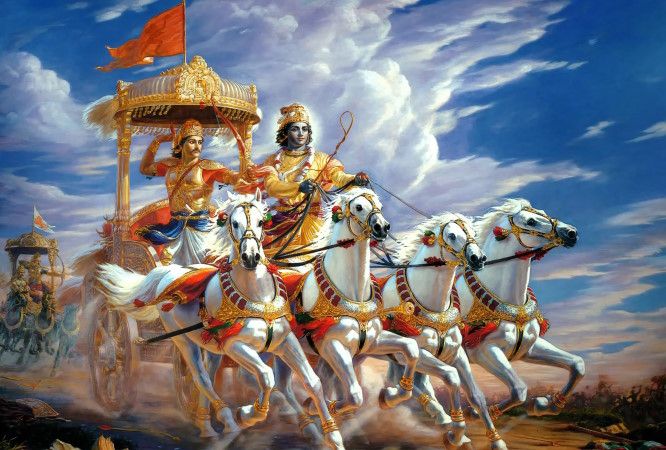
The Vedas (Rig Veda, Yajur Veda, Sama Veda, & Atharva Veda) are at the very core of Hinduism, and prescribe the rituals, philosophies, and traditions associated with the faith. The Bhagavad Gita is a commentary of the Vedas, and presents practical frameworks to lead a good life.

Itihasa or historical texts are many, but it is said that the Ramayana and Mahabharata are the 2 eyes of Sanatana Dharma. There are also many stories of each God, ardent devotees, and much more. There is an ocean of literature when it comes to Hindu texts!

God

God

God in Hindu Dharma is the ultimate form of Bliss and Truth. Then why so many forms?

Hindu Dharma has millions of forms of God of various types. One could say, that these forms, mirror the diversity in the human family. Just as each person is different and connects to different things, each Hindu can pray to the form that they connect the most to, or their ishta devata.

Sanatana Dharma insists that it is important to begin the spiritual journey by praying to a form of God. Simply because, a nameless formless God, who is Truth & Bliss, is incredibly hard to connect to and imagine, for the average human. Praying to a physical murti, performing various kinds of prayer (as detailed below), teaches concentration, patience, and connection.

Hindu Practices & Prayer

Hindu Practices & Prayer

Practices & prayer are widely varied among the faith, they can be influenced by: language, family, ancestral village, region, personal preference, and sect.

Hindus are not obligated to pray a specific way, at a specific time, or place. Every day is auspicious in Sanatana Dharma, in fact, it is said that each day is special to a specific form of God! The best time to pray is said to be Brahma Muhurtam, the time between 4:00 am and sunrise, it is also common to do an evening prayer around 6:00 pm or sunrise.

The most common practices & prayer include:

  • A Hindu in prayer will fold their hands together in namaskara mudra, just like this emoji: 🙏🏽
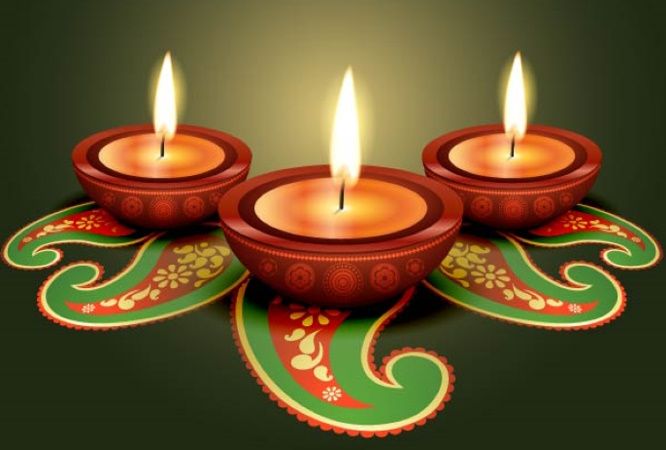
  • Lighting lamps: This signifies burning away impurities, as well as bringing light and knowledge to the household.
    • Conducting Arati, a beautiful practice of offering lamps to God, usually accompanied by ringing bells, and song.
  • Offering food, this act is called Naivedyam, it signifies the idea of being grateful to God for all that we receive, before eating. Fruits, milk, or the food that is prepared for the family is typical.
  • Puja is a common, sequential prayer. The steps are to invite God into the place of prayer, offering Naivedyam, lamps, kumkum (vermillion) & sandalwood, flowers, chanting various names of God, and more. Puja can be an elaborate hours long ritual, or a simple 15 minutes, there are many kinds!
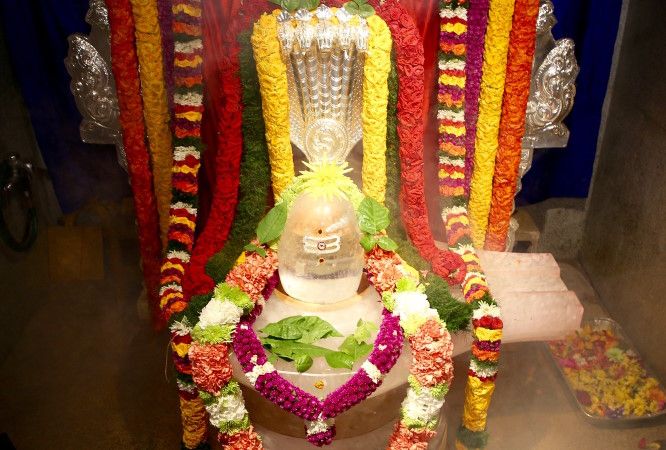
  • Abhishekam, a specific type of puja, is focused on offering water, honey, milk, oil, and more to God. Typically a small murti is used, and after this offering, the murti is decorated with flowers, jewelery, new cloth, and kumkum/sandalwood paste/vibhuti*.
  • Homa is another kind of prayer offered with a focus on fire. Ghee, rice, coconut, and other offerings are given to Agni Deva (God in the form of Fire), whilst reciting the appropriate mantras, verses. Homas are typically performed with the guidance of one or more priests who know the procedures and can guide devotees through.
  • Singing bhajans, songs that are composed upon God, ranging widely in the style, and incredibly fun!
  • Meditation and Yoga, Yoga is a Sanksrit word meaning union, the idea is that through practice of Yoga one can become closer to and eventually merge into the Bliss of God.
  • Using japa mala, a string of beads, usually amounting to 108. These can be used to chant God’s name.
  • Hindus can pray in the home or at temples. Alone, or together. Reciting verses, writing God’s name, singing songs, or even dancing can be an act of prayer!
Temples

Temples

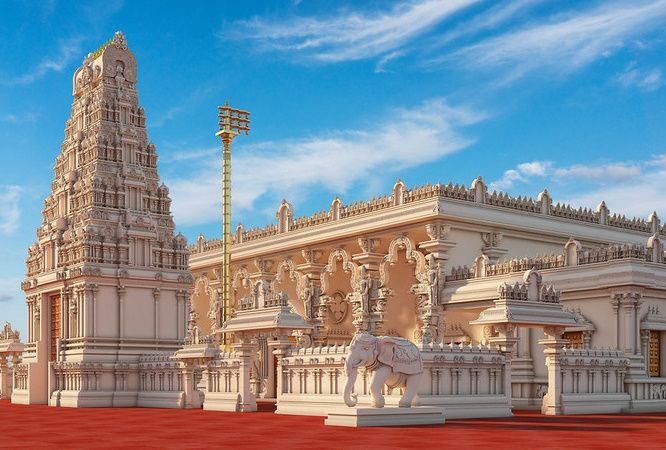
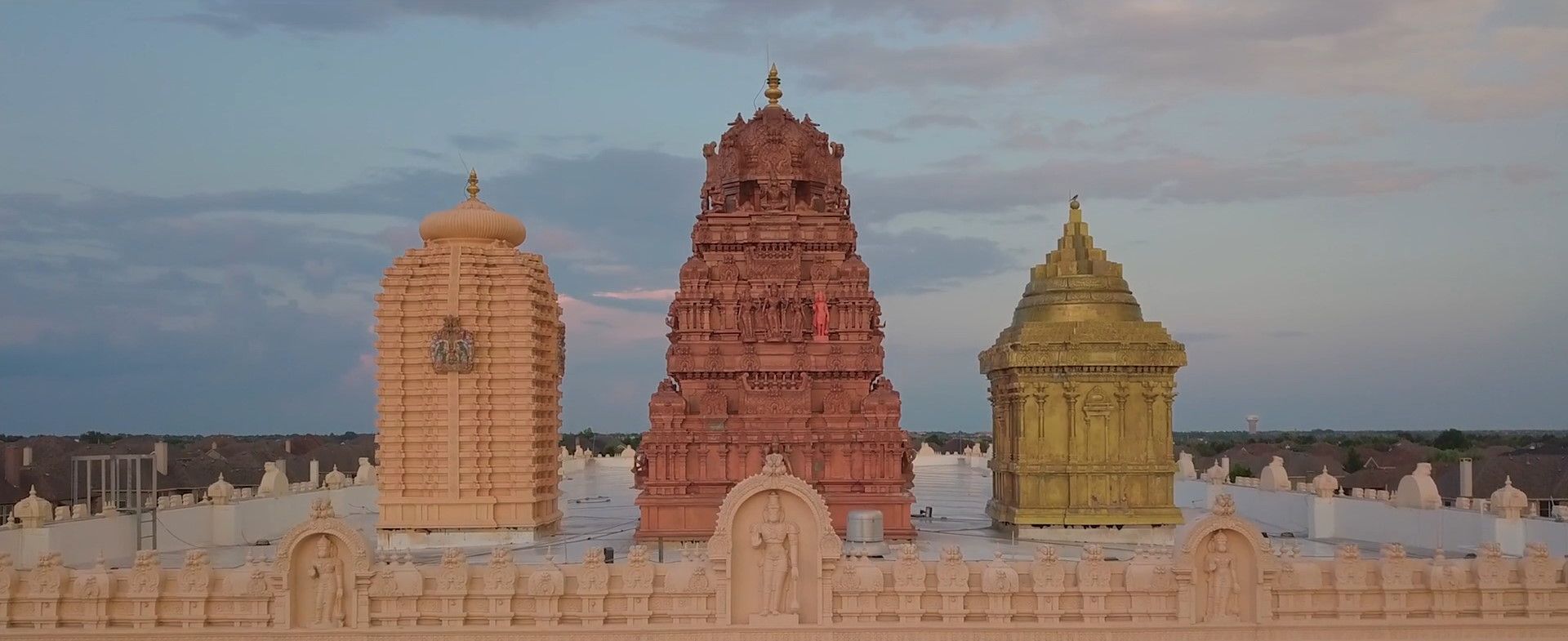
Temples are hugely significant, offering a peaceful and powerful place to pray. God is said to be everywhere, so each being is like a walking temple! Temples are symbolically tied to this metaphor as well, with the altars of God being the heart of the Temple.

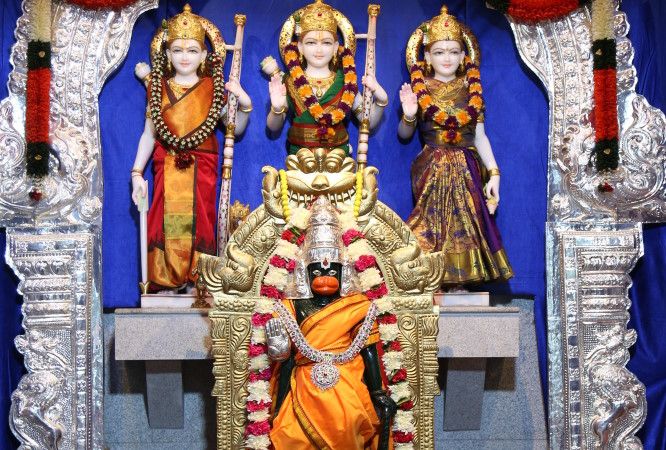
Temples will usually have one or more altars where different Gods are placed, and a hall for devotees to sit in prayer. Altars will usually have murti which can be made of various kinds of stones, metals, or even wood. It is important to note that a murti is not a mere carved piece of wood, rock or metal, a murti is a physical, living residence of God.

Devotees can offer fruits, flowers, at the altars and request priests to perform puja on their behalf. Devotees will also typically do pradakshina around the altars, this involves the devotee walking a number of rounds (any odd number, or 12) rounds around the altar. This is typically done while reciting God’s name. Hindus also perform namaskaram, this is where the devotee bows to God, the forehead, hands, knees, and pads of the feet touching the ground.
Want to learn more?

Want to learn more?

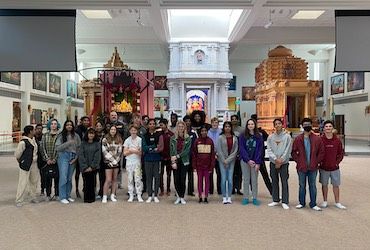
The Karyasiddhi Hanuman Temple regularly hosts Open House sessions for anyone who is curious to learn about Hindu Dharma. Open House sessions are like a guided learning tour of the temple. You will walk away with a foundational understanding of what Hindusim is, how a temple is laid out, and what Hindu prayer looks like! We would love to have you visit!

Please register for Open House sessions using the link below.

Open House Registration Link