48 New Paintings by Artist Sri.Somu Gangadhar that beautifully depict the various events from Hanuman Charithra were installed at Karya Siddhi Hanuman Temple in Aug 2021
Hanuman Charitra Paintings

Links to Paintings

Order a Framed Painting
Click to send request to order a framed Painting of your choice. Please send the specific size of interest 16"x20", 2x3ft, 3x4ft or 4x6ft and the frame choice of wooden or metallic finish.

Watch video of Paintings
Click to watch the Hanuman Charithra Paintings displayed at Karya Siddhi Hanuman Temple.
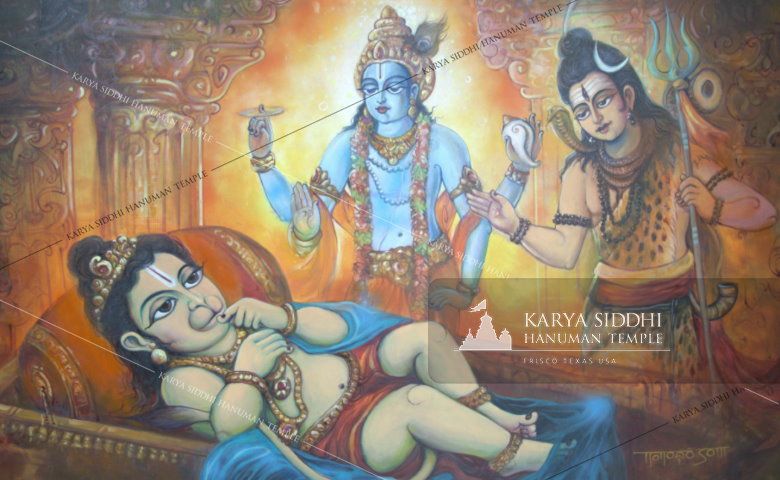
1. Śrī Bāla Hanumān, born of divine Hari-Hara Śakti, is blessed by both upon His birth
Mahā Viṣṇu as Nara-Nārayaṇa combines His own divine power - tējas, along with the power of rest of the Gods and gives it to Paramēśwara - Lord Śiva who swallows it. Later, Śiva along with Pārvati Dēvi, reached Venkatāchala (the sacred Tirupati hills in Andhra Pradesh, India). Pārvati Dēvi keeps the tējas in the sacred fire. The fire God Agñi, unable to bear its brightness, gives it to the God of wind, Vāyu. In turn, Vāyu Dēva places it in Anjanā Dēvī’s hand. She eats the tējas mistaking it to be a fruit. She performs severe penance seeking a powerful son. Because of the divine power of that tējas she is blessed with Hanumān. Thus, Ānjanēya is the son of Hari Hara Śakti and is blessed by both Mahā Viṣṇu and Paramēśwara at the time of His birth.
According to “Parāśara Samhita” - a compendium on Śrī Hanumān written by Sage Parāśara (father of Vyāsa Mahaṛṣi), Hanumān took birth on:
vaiśākhē māsi kṛṣṇāyāṁ daśamyāṁ manda vāsarē | pūrva prōṣṭha padāyuktā tathā vaidhṛti saṁyutā || tasyāṁ madhyāhna vēḷāyāṁ janayāmāsa vai sutam | mahābalaṁ mahā sattvaṁ viṣṇu bhakti parāyaṇam ||
Ānjanēya took birth in - Vaiśākha māsa (month of May - June), Kriṣṇa pakśa (waning half of the month), Daśami tithi (10th day), Purvābhadra nakśatra (star), on a saturday during the period of Vaidhṛti yōga.
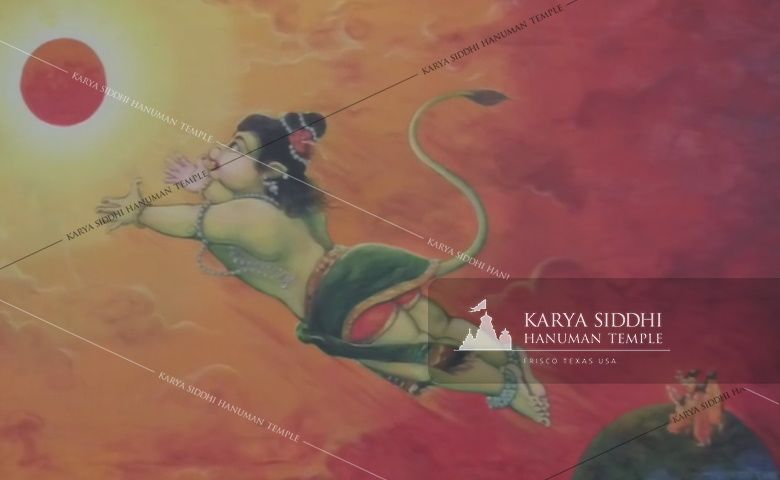
2. Śrī Bāla Hanumān mistakes the Sun for a fruit and leaps from the Earth to eat it
Approximately on the 6th day (Amavāsya tithi) after His birth, baby Hanumān was very hungry and Anjanā Dēvi asked him to find a ripe fruit and eat it. Hanumān looked up and noticed the ripe, yellow-tinged red Sun coming up in the sky at sunrise. Mistaking the Sun to be a fruit, Hanumān jumps upwards to the solar plane in the sky to grab the Sun.
As this was during an eclipse, Rāhu also arrives to cover and over shadow the Sun. Hanumān sees the gigantic face of Rāhu and holds him in his fists tightly, thus crushing him. The scared Rāhu somehow escapes, and runs to Indra for protection.
Indra hits Ānjanēya’s jaw with his powerful Vajrāyudha (Hanu in Sanskrit means jaw). Ānjanēya faints and falls from the sky. Vāyu Dēva, holds his son Ānjanēya and arrests (locks) himself inside a cave. Thus, the vital air element vanishes from all the worlds. To avoid destruction and calamity, Brahma Dēva and all the Gods arrive at the cave and shower their choicest, powerful and divine blessings on Bāla Ānjanēya.
āmiśī kṛta mārtānḍaṁ gōṣpadī kṛta sāgaraṁ | tṛṇīkṛta daśagrīvaṁ ānjanēyaṁ namāmyaham ||
I salute and pray to Śrī Ānjanēya Swāmy who considered the gigantic Sun comparable to a mango fruit! Who crossed the vast ocean as if it were a tiny puddle on earth created by a calf’s footprint! And who rejected the mightiest demon Rāvaṇa as if he were an insect (fly)!
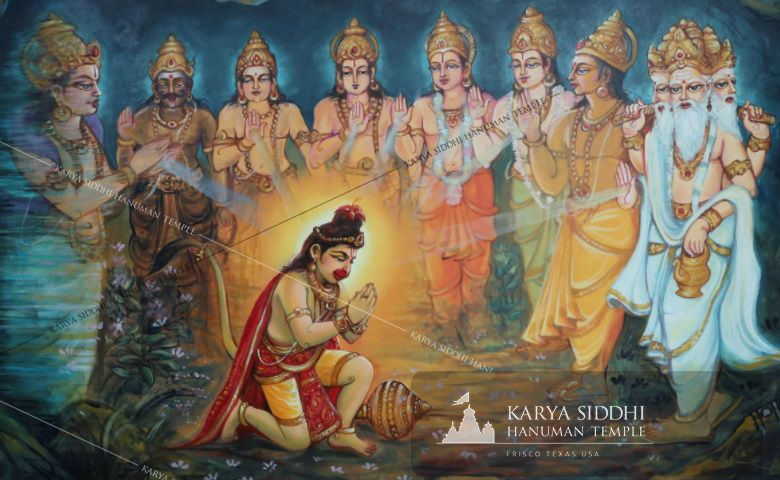
3. The Gods assemble to bless Śrī Bāla Hanumān with boons
When Bāla Ānjanēya attempted to eat the Sun mistaking it to be a ripe mango, the chief of Demi-gods Indra hurled the Vajrāyudha (thunderbolt) weapon to stop him. It hits the jaw of Bāla Ānjanēya and slightly cracks it. “Hanu” means jaw. As he is the one with the broken jaw he is known as “Hanumān”. This is the literal meaning.
The special significance of the above story is that Hanumān is a great Bhakta (devotee), chanting the name of Rāmā to an extent that his jaw hurts. Indrā’s thunderbolt signifies the śakti (power) of Mantrās. Our jaws are necessary to properly chant the Lord’s name - Mantra imbibed with sacred bijākṣarās (powerful seed letters). The name Hanumān highlights the severe upāsana (penance) of a spiritual seeker with strong devotion, to realize God.
Due to the impact of the thunderbolt, Hanumān falls from the sky and is protected by his divine father Vāyu Dēva, who catches him. Vāyu Dēva then enters a cave with baby Hanumān in His hands. He is enraged at the act of Indra and arrests the flow of air which causes a calamity for the lōkās (worlds).
All the Gods, including Brahma arrive at the cave to bless baby Hanumān. They all appease Vāyu Dēva and calm him. Brahma Dēva blesses Hanumān so that he regains consciousness and his jaw is healed. He grants a boon to Hanumān that even the Brahmāstra (supernatural) weapon would never hurt him. All other Gods also shower their boons on baby Hanumān.
Here are a few examples:
- Indra grants that his thunderbolt will never hurt Hanumān.
- Sun God gives 1% of his own brightness to Hanumān.
- Varuṇa Dēva gives a boon that Hanumān will conquer water and will never die because of water.
- Kubēra blesses that his mace will be powerless to kill Hanumān and that he would never tire in battles.
- Viśwakarma gave a boon that Hanumān will not die with any weapon created by Viśwakarma.
- Agni Dēva (Fire God) blesses that fire can not destroy Hanumān.
- Yama Dēva granted good health and a boon of immunity from his Yama pāśa (noose of death)!
Thus many Gods bestowed extraordinary powers on Hanumān.
These enabled him to tide over countless hurdles and dangers while crossing the gigantic ocean to reach Lanka city; also gave him the ability to kill numerous mighty demons by being immune to the Brahmāstra weapon hurled by Indrajit (son of Rāvaṇa).
buddhirbalaṃ yaśodhairya nirbhayatvamarogatā | ajāḍhyaṃ vākpaṭuḥtvaṃca hanumat smaraṇādbhavēt ||
The able, mighty and intellectually sharp Hanumān grants health, wealth, fame, courage, might and intellect to devotees who pray and surrender to him.
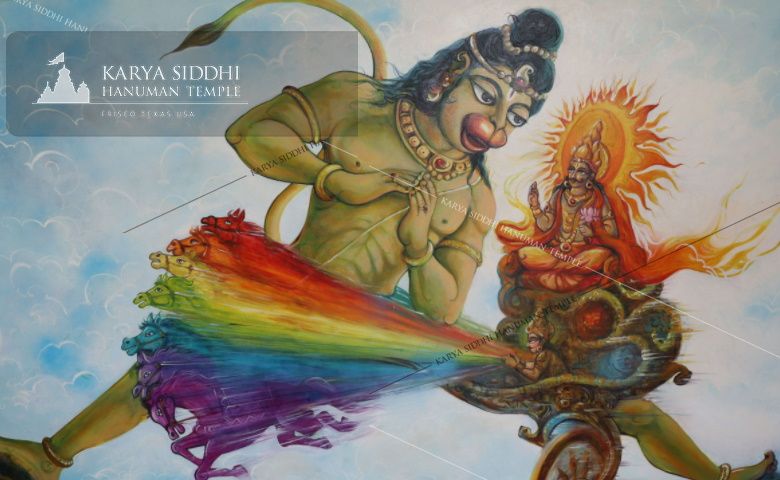
4. Śrī Hanumān, takes on a gigantic form, reaching up to the sky, to receive His Guru’s lessons
Hanumān acquired all knowledge and education from the Sun God as His teacher.
However, since the Sun planet travels constantly in space it was very difficult for him to learn. The clever Hanumān grew his body gigantically, placing one leg on Udayādri (Udayā = sunrise; adri = mountain) and the other on Astādri (Asta = sunset; adri = mountain). He then started learning from his Guru, the Sun God by placing his ear close to the Sun’s chariot. Hanumān is famous for achieving such impossible tasks!
No wonder Hanumān blesses his devotees with similar abilities and removes all the hurdles in their lives.
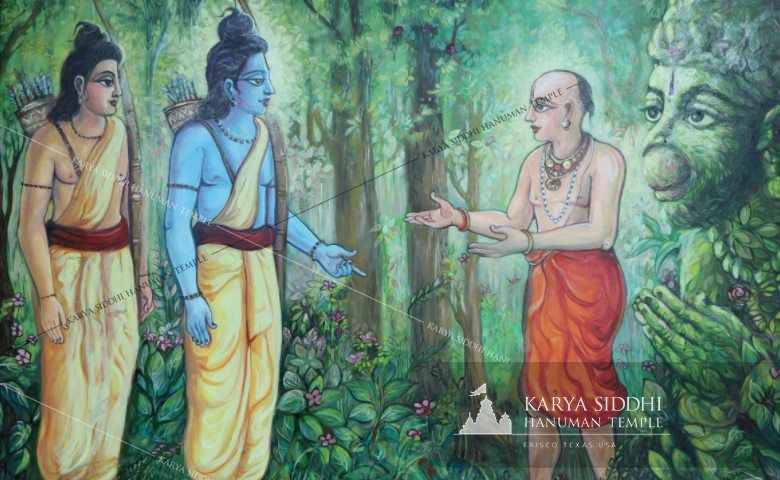
5. Śrī Hanumān, in disguise, receives His first divine darśana of Śrī Rāma
One account of Mātanga Mahaṛṣi’s curse, Vāli, the mighty unconquerable monkey King, is banned from treading the Riśyamūka mountain. He is afraid of his head bursting into thousands of pieces if he does not obey.
Being afraid of Vāli, his brother Sugrīva along with four ministers take refuge and confine their lives on the Riśyamūka mountain. One day Śrī Rāma and Lakṣmaṇa arrive at the base of the mountain. Sugrīva gets terrified mistaking them to be spies of Vāli who have come to find his whereabouts. Hanumān boosts Sugrīva’s courage and reasons with him that one must not draw conclusions without proper information.
kapi rūpaṁ parityajya hanumān mārutātmajaḥ | bhikṣu rūpaṁ tatō bhējē, śaṭha buddhitayā kapiḥ ||
Hanumān, being a ‘kāmarūpi’ (ability to change form at will), assumes a mendicant’s form and approaches Śrī Rāma and Lakṣmaṇa to enquire about them!
According to the Vālmīki Rāmāyaṇa, this is the very first time Hanumān has the divine vision (darśana) of Śrī Rāma and Lakṣmaṇa.
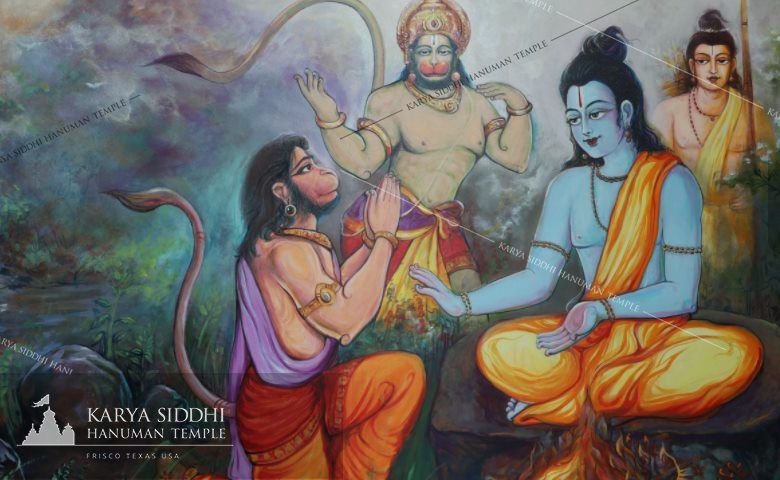
6. Śrī Hanumān facilitates a pledge of friendship between Śrī Rāma and King Sugrīva
Hanumān brings Śrī Rāma and Lakṣmaṇa to the top of the Riśyamūka mountain where Sugrīva is eagerly waiting. After the mutual introductions, Hanumān organizes a friendship-pledge between Śrī Rāma and Sugrīva with Fire-God as witness (“agñi sākṣi”)**. This strong, pious, and everlasting friendship is also famously known in the world as “Sugrīva maitri”.
**The fire is kindled through friction between two wood sticks from the “Araṇi” tree. Such a fire is called “Pavitram” i.e. the purest or most pious. A pledge taken in front of such pure fire would also be considered the purest. An oath or pledge taken in front of such a fire is believed to be yielding very sublime and successful results.
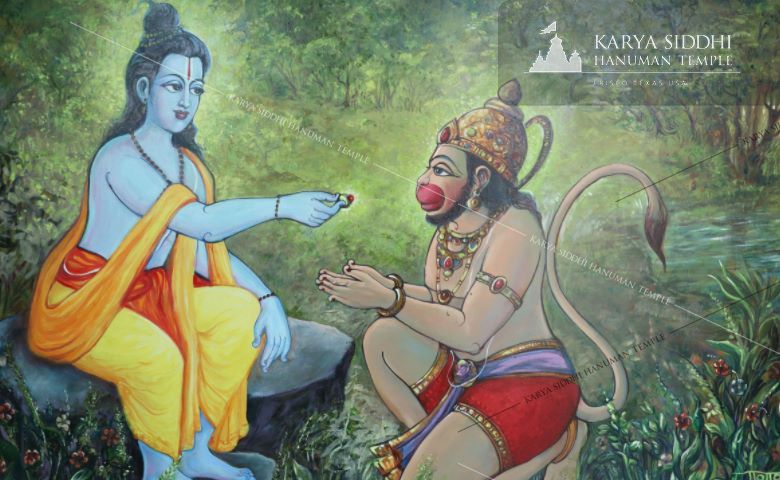
7. Śrī Hanumān receives a signet ring to identify Him as Śrī Rāmā’s messenger
The great king of Vānaras, Sugrīva assembles his entire army and commences to send them in all directions in search of Sītā Mātā. Hanumān is asked to join the forces that are headed towards the southern direction. Śrī Rāma identifies Hanumān as his chosen messenger and gives his ring as a form of identification to be given to Sītā Dēvī whenever Hanumān meets her. Such incidents in the Vālmīki Rāmāyaṇa confirm the divinity of Śrī Rāma personified as a human.
Hanumān says to Sītā Mātā:
rāma nāmānkitaṁ cēdam paśya dēvyanguḷīyakaṁ
Śrī Rāma mudrika (ring as signage of Śrī Rāma) has an inscription of Śrī Rāmā’s name on it. It is the same ring that Hanumān offers to Sītā Mātā when he meets her in the Aśōkavana located in the Lanka city.
Scholars mention that the Śrī Rāma mantra bījākṣara inscribed on the ring enabled Hanumān to cross the 100 yōjana long ocean.
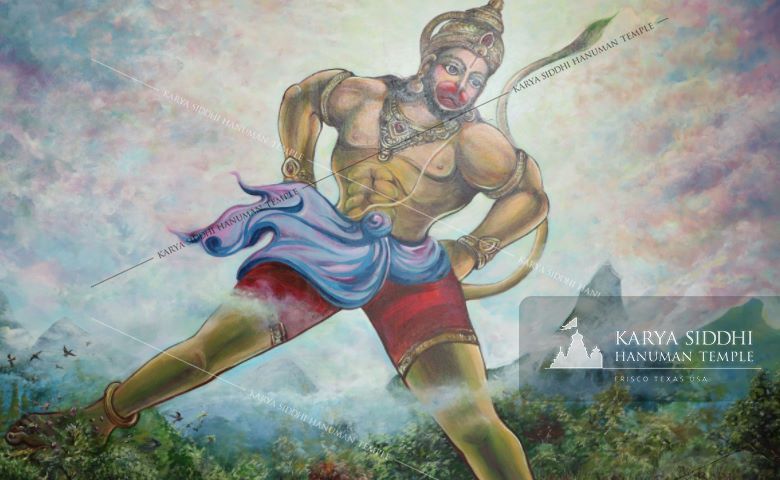
8. Śrī Hanumān assumes a gigantic form for His leap across the ocean towards Lanka
Hanumān, while getting ready to take the gigantic leap over the 100 yōjana span of the ocean to reach Lanka, reaches the Mahēndra giri mountain range. He makes a very firm resolution to reach the opposite end of the ocean.
“dhṛtir, dṛṣṭir, matir, dākṣyaṁ” - Strength, foresight, intellectual greatness, capability with leadership characteristics – these four qualities are required for a “kārya sādhaka”. Hanumān is an embodiment of such noble attributes.hanumān parvatākārō babhūvādbhuta darśanaḥ
Hanumān grows his body gigantically and resembles a mountain himself!
He fixes his gaze at the Bhrukuṭi (spot between the eyebrows) looking upwards - “ūrdhvaṁ praṇihitēkṣaṇaḥ”. Hanumān inhales to full capacity, filling his lungs with air and arrests his breath like a perfect yōgi.
Hanumān, ready to leap, bends his knees compressing the mountain. Due to this pressure, many mountain peaks break and fall with a deafening noise. Many terrified animals on the mountain run around in panic. Scared snakes come out from their hideouts and hit the rocks, hissing and emitting poisonous venom. All the sages, angels and divine species are subject to utmost surprise and rise to the sky to witness the amazing phenomenon.
In spite of possessing amazing power, caliber, strength, and greatness, Hanumān humbly says: “rāmārthaṁ vānarārthaṁ ca” - he is taking up this arduous task solely to serve his Lord Śrī Rāma and to get name and fame to all the monkeys.
Sri Hanumān’s avatara (incarnation) is a personification of such selfless and pure devotion! Hanumān then takes off with a giant leap into the sky. Due to the velocity of his huge thighs, many trees fully blossomed with colorful flowers, get uprooted and follow along for some distance before falling into the ocean. Hanumān shines in the sky as if his body is fully decorated with various colorful flowers.
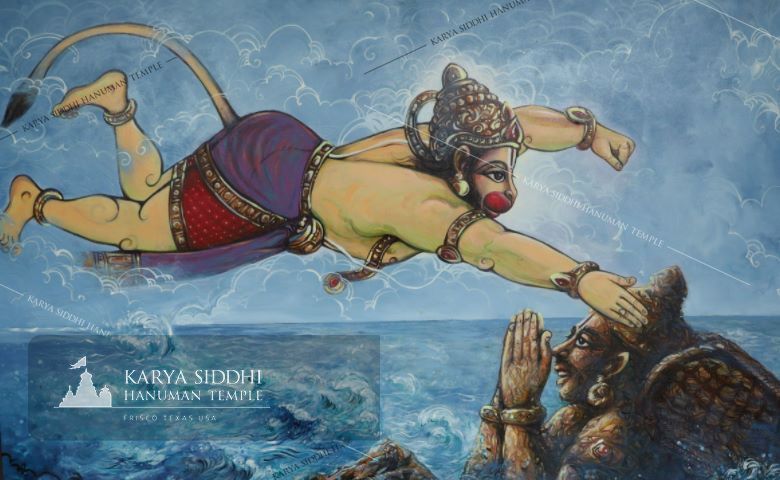
9. Śrī Hanumān blesses Maināka, the winged mountain, on His way to Lanka
Śrī Hanumān’s firm resolve to take the gigantic leap over the 100 yōjana span of ocean is extraordinary. His unwavering determination with unflinching faith in Śrī Rāma made him cross this first hurdle.
Hanumān faces the second hurdle, enroute to Lanka in mid-sky when the mountain Maināka requests Hanumān to stop and rest for some time. Maināka is the winged mountain with abundant golden shiny peaks, lush greenery and trees full of fruits and flowers. It is compared to the lures and attractive comforts of the mundane materialistic world and is indeed a test to Hanumān’s unflinching resolve and steadfastness to reach his desired destination of Lanka city on the other side of the ocean. Hanumān, recognizing that there is no threat and also respecting his request, blesses Maināka by touching the mountain and proceeds towards his goal without stopping.
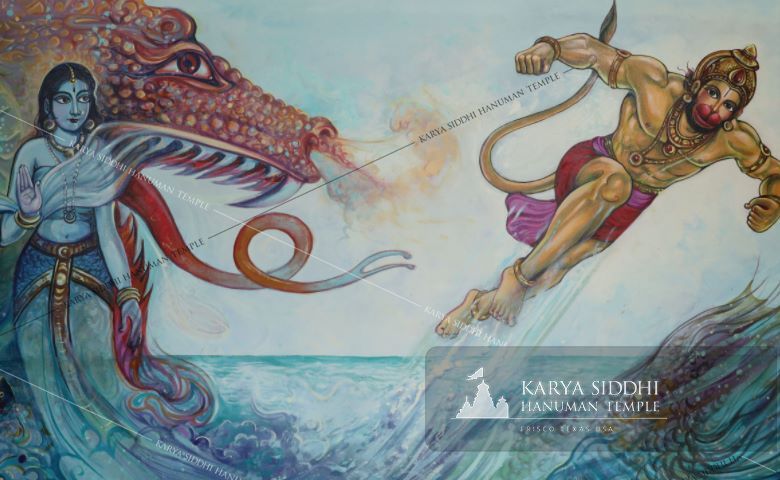
10. Śrī Hanumān wins over Surasā Dēvi by passing her tests
‘Surasā’ is the name of Nāga Mātā (divine female serpent). She is one of the daughters of Dakṣa Prajāpati and dwells in the ocean. All the Gods request her to further test Hanumān’s intellectual prowess and capabilities. This is the third hurdle during Hanumān’s journey.
Surasā assumes a gigantic and fierce form, opens her mouth widely so as to swallow Hanumān in mid-air. She threatens to kill him and challenges Hanumān to enter her mouth first. Hanumān cleverly assumes a very tiny form spanning a few inches, quickly enters her mouth and comes out immediately, thus saving himself. Hanumān reverentially addresses her as “Dākṣāyaṇi!” (daughter of Dakṣa) as soon as he comes out. This was based on the information given by Sugrīva that there exists a giant serpent in the path to Lanka city. Impressed with Hanuman’s courage and ingenuity Surasā Dēvi blesses Hanumān with success:
artha siddhyai hari śrēṣhṭha! gachcha saumya! yathā sukhaṁ | samānayaśva vaidēhīm rāghavēṇa mahātmanā ||
I bless you! O! greatest of the Vānaras! O! Soft-natured one! Please proceed in your journey comfortably. Please unite Sīta Dēvi with Śrī Rāma soon.
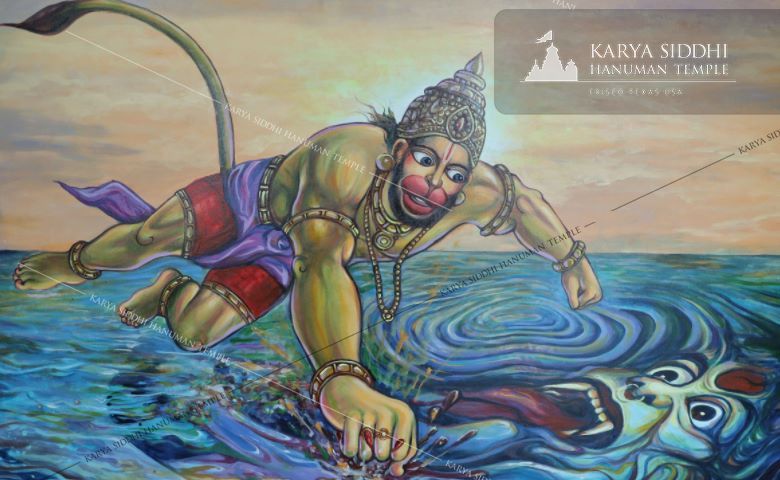
11. Śrī Hanumān slays Simhika, a fierce sea demon
Hanumān faces his fourth hurdle, a cruel and fierce aqua-demon named ‘Simhika” (one whose face resembles a lion), while leaping over the ocean on his way to Lanka city.
Simhika is also known as “chāyā grāhi” i.e, She captures the shadow of any object flying over her on the ocean surface, arrests it and drags it into its mouth.
Hanumān, while leaping over the ocean, notices that he is being held back by a strong force and realizes that it is Simhika who has restrained him by capturing his shadow. (It is said in the Vālmīki Rāmāyaṇa that Hanumān’s shadow is 10 yōjanas in width and 30 yōjanās long). Hanumān recollects that Sugrīva had alerted him that an aqua / sea-demon will attack him. Hanumān speedily enters its huge mouth assuming a very tiny form, slashes all the intestines, chest and body parts with his nails and comes out of its mouth with great velocity. Thus, Simhika lays dead floating on the waters with its gigantic body. Hanumān resumes His journey forward, unabated.
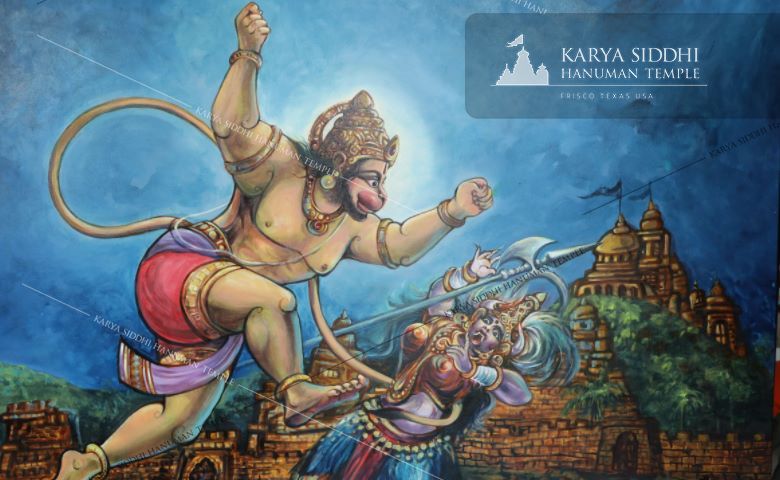
12. Śrī Hanumān lands in Lanka and conquers Lankā, the city’s demoness guardian
Hanumān successfully lands in Lanka After the gigantic leap over the 100 yōjanās wide ocean. He reduces his size drastically so that he is undetected by the demons guarding Lanka. He awaits nightfall and reaches the fort’s wall near the main entrance to Lanka. The fierce and immensely powerful demon Lankā, standing guard at the main entrance of the fort, detects the tiny Hanumān entering the city. She attacks and accosts Hanumān. The enraged Hanumān retaliates with a left handed punch. Lankā topples and falls.
She recovers and addresses Hanumān reverentially that in the past Brahma Dēva had ordained that she would be relieved from her demonic curse when struck by a divine and mighty monkey. Brahma Dēva further adds that it will also signify that Rāvaṇā’s destruction is imminent.
“vimārga sarvatra gatō yathā sukham…” - Hence O! Mighty Vānara! please proceed and search for Sītā Mātā in the Lanka city! Saying thus, she vanished and obtained her previous blessed form getting relieved from the curse subjected by Brahma Dēva in the past.
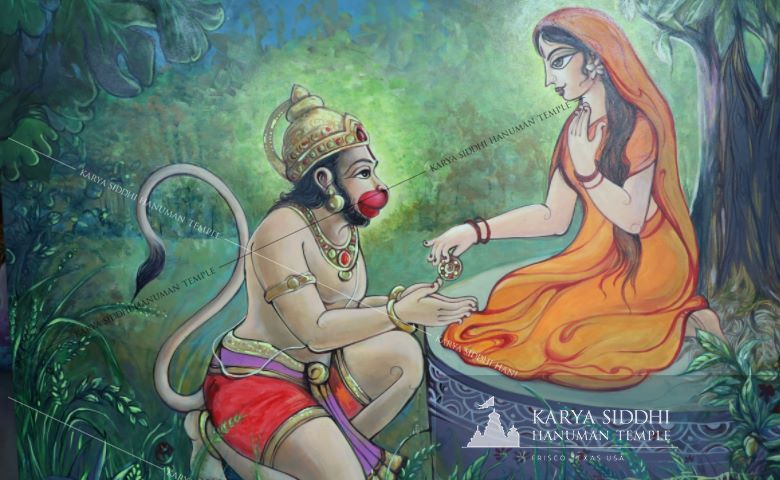
13. Śrī Hanumān receives the Chūḍāmaṇi from Śrī Sītā Mātā in Aśōkavana
Hanumān, while searching Lanka, finds Sītā Mātā in the Aśōkavana. She was seated beneath a ‘ŚimŚupa’ tree. After winning over her trust that he is indeed the messenger of Śrī Rāma, Hanumān gives her the ring with Śrī Rāma’s inscription. Sītā Mātā recognizes the ring of Śrī Rāma. She is overjoyed and imagines herself in the company of Her beloved husband. Hanumān shows His Viśwarūpa to Sītā Mātā and boosts her confidence. He states Śrī Rāma will conquer Lanka, kill Rāvaṇa and take her home with such valorous, powerful and mighty heroes like himself being part of Śrī Rāma and Sugrīvā’s army. Sītā Mātā then hands over her Chūḍāmaṇi (hair ornament) as proof of Hanumān meeting her.
Scholars mention that Hanumān was able to successfully cross the ocean with a gigantic leap and reach Lanka city and find Sītā Mātā only because of Śrī Rāma protecting and guiding him.
Similarly, scholars mention that Hanumān was able to take a gigantic leap over the ocean and travel back to Śrī Rāma because of the power of the Chūḍāmaṇi ornament from Sītā Mātā.
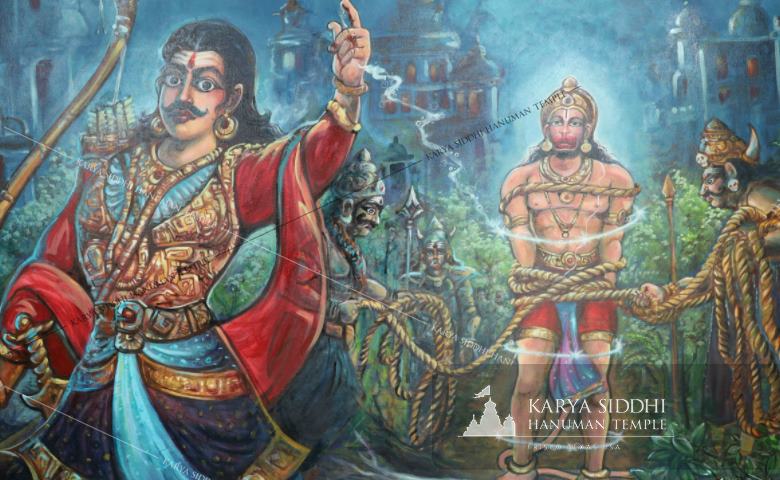
14. Śrī Hanumān respectfully submits to the Brahmāstra & gains an audience with Rāvaṇa
In his childhood Hanumān was blessed by a multitude of Gods that none of their weapons could hurt him, including Brahma Dēvā’s Brahmāstra. When Indrajīt launched the Brahmāstra, out of respect towards Brahma Dēva, Hanumān calmly surrendered. Hanumān pretends as if bound and tortured even though he was unharmed due to Brahma Dēvā’s boon. Additionally, Brahmāstra is nullified if bound with any additional means on top of it. The foolish demons tie Hanumān with rags and ropes on top of the Brahmāstra, thus making it futile. Indrajīt knows this secret and worries about the foolish act of his soldiers. However, since Hanumān was determined to see Rāvaṇa, he pretends as if still bound, thus deceiving everyone around him.
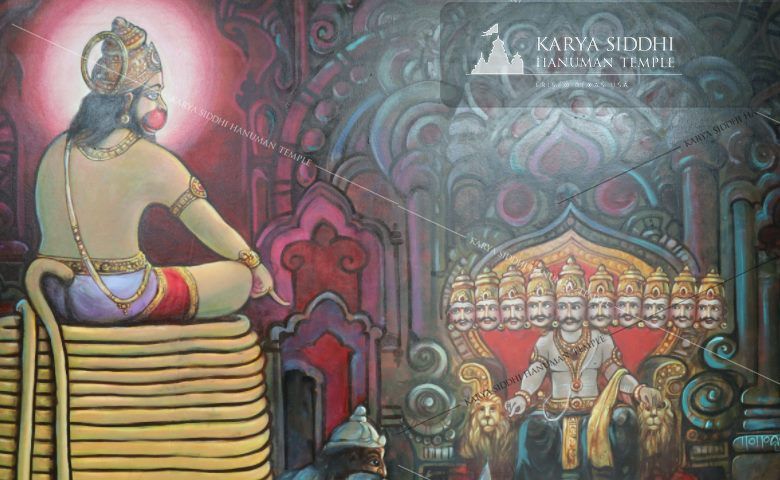
15. Seated on an Āsana of His own tail, Śrī Hanumān delivers His message to Rāvaṇa
Foolish demons take Hanumān, bound by numerous cloths and rags, in a procession through the streets of Lanka. Hanumān keenly analyzes the enemy’s capability, strength, weapons, repository locations, strategies and other secrets while traveling through the streets. Finally, Hanumān is presented in front of the mighty Rāvaṇa. Upon glancing at Rāvaṇa, Hanumān feels that if not for the mistake of abducting Sītā Mātā, the charismatic Rāvaṇa could have ruled the three worlds eternally. Hanumān realizes that Rāvaṇā’s destruction is now imminent.
Being Śrī Rāmā’s messenger, Hanumān imparts moral instruction to Rāvaṇa and urges him to return Sītā Mātā to Śrī Rāma and thus earn the forgiveness of the ever compassionate Śrī Rāma.
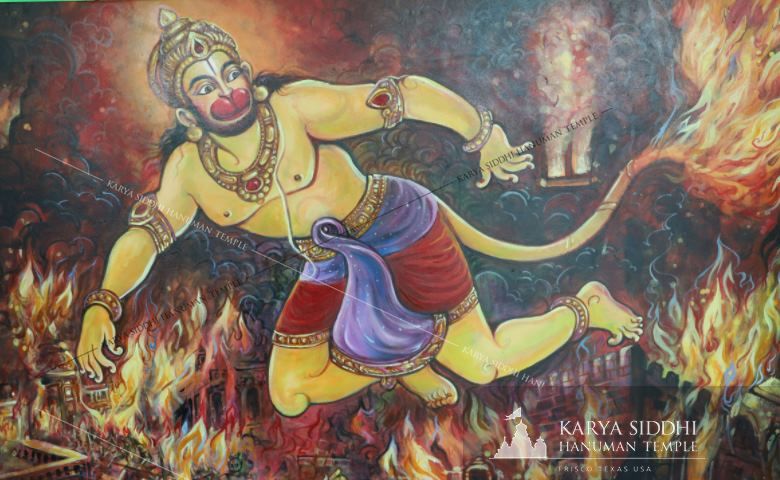
16. Śrī Hanumān wreaks havoc by setting the entire city of Lanka on fire
Upon hearing the advice Śrī Rāma’s messenger - Hanumān, the enraged Rāvaṇa wants to kill him. Rāvaṇa’s brother Vibhīṣaṇa intervenes, and convinces Ravana that killing an envoy is against the Śāstrā (Hindu dharma - rules). Therefore Rāvaṇa orders that Hanuman’s tail be torched in order to insult him (tail being very important to a vānara). Hanumān uses this opportunity to burn the entire city of Lanka except Vibhīṣaṇā’s home.
Scholars explain the subtle significance of this episode as follows. Sītā Mātā is Śakti - an embodiment of the supreme energy. Receiving Chūḍāmaṇi from Sītā Mātā herself, Hanumān is super charged, and needed to expend some energy to return to his normal state. Therefore, he wreaks havoc by lighting up the entire Lanka in flames!
Whilst Hanumān’s tail was on fire, Sītā Mātā prays to Agñi Dēva (Fire God) not to burn Hanumān saying “śītō bhava hanūmataḥ” – may the fire God show cooling effect on Hanumān’s tail.
After reducing Lanka to ashes, Hanumān jumps into the ocean to extinguish the fire. Suddenly he realizes that the tree in the Aśōkavana under which Sītā Mātā was sitting might have caught fire and immediately regrets his hasty, fickle and monkey-like act. Hanumān then overhears the chāraṇās (celestial singers flying in the sky) discussing that Sītā Mātā is safe, and feels relieved and happy.
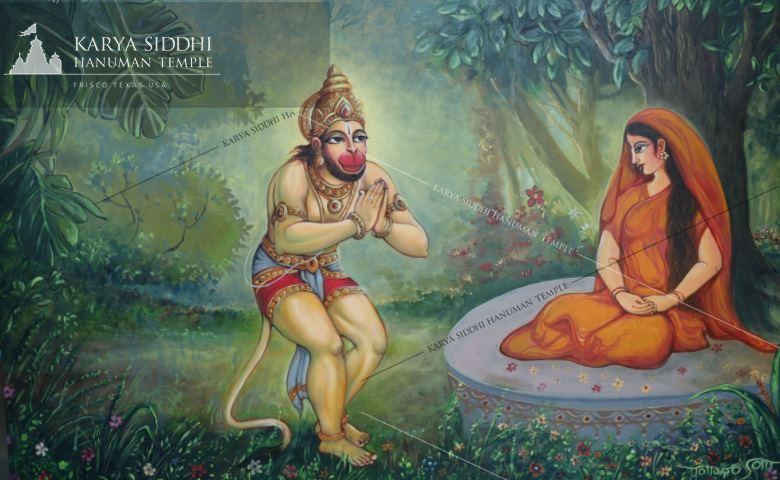
17. Śrī Hanumān seeks Śrī Sītā Mātā’s permission before returning back to Śrī Rāma
After burning Lanka and jumping in the ocean to extinguish the fire on his tail, Hanumān returns to visit Sītā Mātā. Hanumān offers salutations and prayers to Sītā Mātā. He enquires about her safety and seeks permission to leave before taking the gigantic leap over the ocean back to Śrī Rāma.
Hanumān torched the city of Lanka without realizing that the tree in Aśōkavana under which Sītā Mātā was sitting might have caught fire and she could have been a victim. The lesson one must learn from this episode is that we must not take regrettable hasty decisions without analyzing the pros and cons.
Hanumān returning to see Sītā Mātā and seeking permission shows his bhakti (devotion), benevolence and maturity as a messenger. A spiritual seeker needs all these noble qualities to attain self-realization.
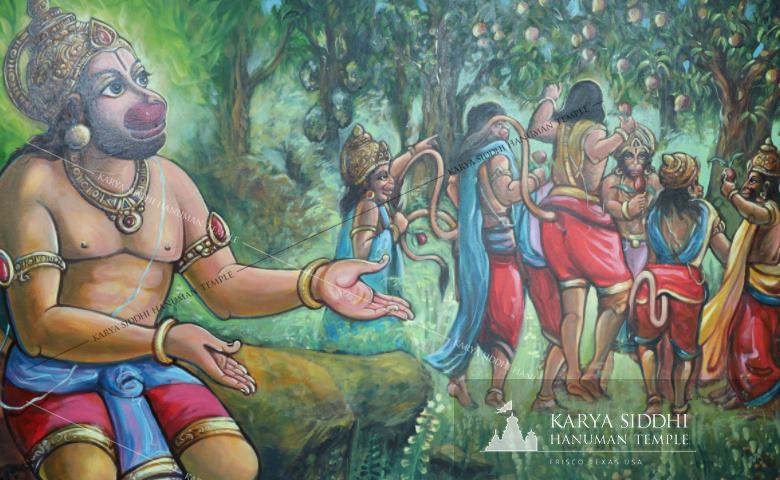
18. Hearing of Śrī Hanumān success, Vānarās celebrate recklessly in Madhuvana
Upon Hanumān’s return from Lanka by leaping across the ocean, all the vānarās (monkeys) are very excited with happiness and request to enter the safeguarded garden “Madhuvana” to eat fruits and drink honey. Hanumān gives his consent along with Prince Angada. Madhuvana had been protected for many generations and currently was under the control of King Sugrīva. The vānara warrior Dadhimukha is the security guard for the “pramada vana”- the pleasure garden full of lush green trees with abundant fruits and honey, dearest to King Sugrīva. The monkeys disregard Dadhimukha and devastate the garden and destroy the trees while recklessly enjoying the fruits and honey, celebrating Hanumān’s success in finding Sītā Mātā.
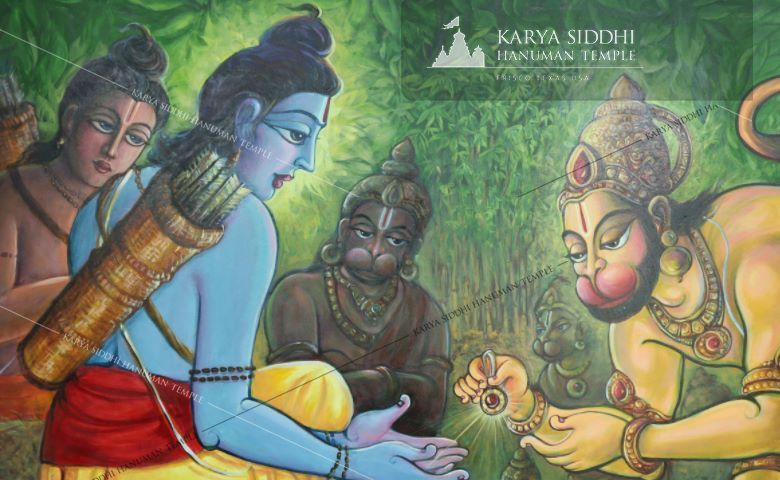
19. Śrī Hanumān gives Śrī Sītā Mātā’s Chūḍāmaṇi to Śrī Rāma
Hanumān after successfully crossing the ocean back from Lanka, meets Śrī Rāma and offers him the chūḍāmaṇi given by Sītā Mātā. Śrī Rāma is extremely overjoyed and teary eyed with ecstasy and happiness. Taking the Chūḍāmaṇi from Hanumān, Śrī Rāma feels elated as if he has physically met Sītā Dēvi. Hanumān shares a few incidents that Sītā Dēvi had mentioned as proof to Śrī Rāma that he has indeed met her. The commemorative incidents narrated were secret and known only to Sītā Dēvi and Śrī Rāma. One such incident is the ‘Kākāsura vrittānta’ (episode of a demonic crow that attacked Sītā Dēvi in the past when they were at Chitrakūṭa).
Hanumān is the one who alleviated the sorrow of both Sītā Dēvi and Śrī Rāma. When Hanumān met Sītā Dēvi in the Aśōkavana, she was on the verge of losing confidence and dying. By offering Śrī Rāmā’s mudrikā - ring to Sītā Dēvi, Hanumān rekindled her hope and desire to live. Later in the Rāmāyaṇa, Lakṣmaṇā’s life was also saved by Hanumān by bringing the Sanjīvani mountain.
Hanumān is the life-giving, life-rejuvenating divinity. By praying to Hanumān one will regain hope, confidence and a strong life energy.
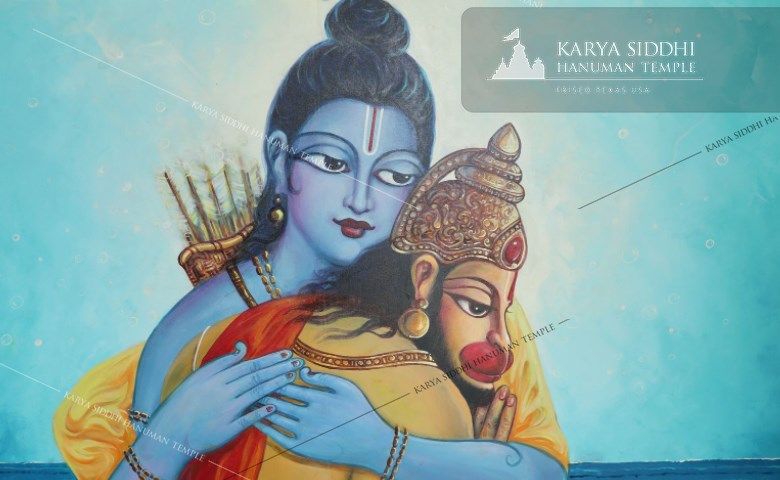
20. Śrī Rāma embraces Śrī Hanumān in gratitude for locating Śrī Sītā Mātā
Śrī Rāma was immensely pleased with Hanumān for finding the whereabouts of Sītā Dēvi and bringing her Chūḍāmaṇi. Śrī Rāmā’s misery was destroyed by Hanumān. Śrī Rāma felt that no object in this world is fitting enough to reward and recognize Hanumān. Thus, Śrī Rāma gave a loving hug and embraced Hanumān, symbolizing Śrī Rāma gave himself, his heart (hṛdaya arpaṇa) to Hanumān. Hanumān felt immensely happy.
What can be a greater reward than the God almighty Śrī Rāma giving himself to a devotee! Everything else in the world pales in comparison.
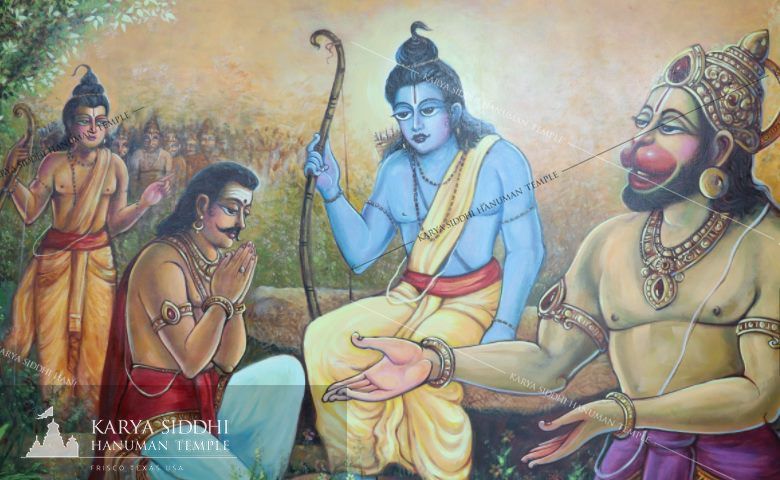
21. Śrī Hanumān supports Vibhīṣaṇa as he seeks refuge in Śrī Rāma
Śrī Rāma is along the banks with the Vānara army getting ready to cross the vast ocean. During that time, Vibhīṣaṇa comes flying in the sky with “Āsurī māya” (evil magical power of demons), along with his ministers to meet Śrī Rāma. They request permission to land and seek refuge in Śrī Rāma. Angada, Jāmbavanta and many other Vānarā leaders counsel Śrī Rāma not to accept Vibhīṣaṇā’s friendship as he belonged to the enemy camp. However, Hanumān approves of the friendship.
This is because Hanumān had observed and learnt about Vibhīṣaṇa during his Lanka visit. While Hanumān was in Lanka, Vibhīṣaṇa convinced his cruel brother Rāvaṇa not to kill a messenger. As Vibhīṣaṇa always sided with Dharma (the right thing) while speaking, Hanumān knew that he was a good person devoid of evil intentions.
Vibhīṣaṇa is given permission to land along with his ministers. He rushes to meet Śrī Rāma surrendering and seeking refuge. Śrī Rāma readily accepts Vibhīṣaṇa as his friend. This shows Śrī Rāma gives high regard to Hanumān’s decision making and supreme analytical abilities.
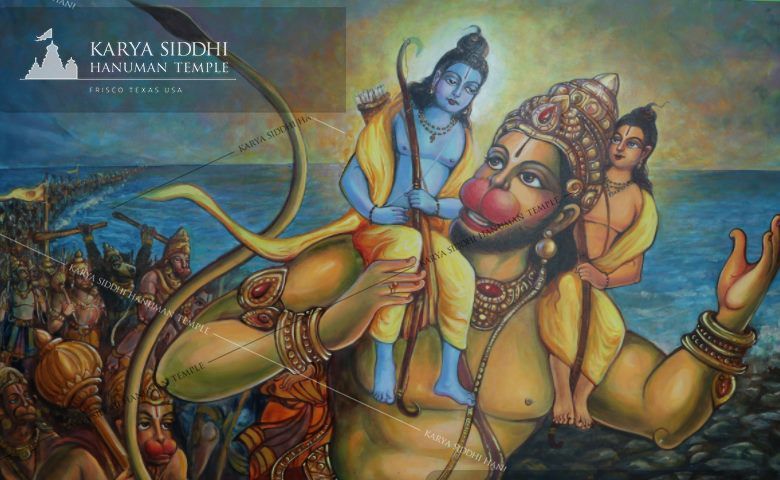
22. Śrī Hanumān crosses Rāma Sētu with Śrī Rāma and Lakṣmaņa on His shoulders
Nīla, one of the valiant Vānarā’s in Śrī Rāmā’s army, was cursed (turns out to be a born) by sages in his childhood that anything thrown in water by him will not drown, but will float. Hence, the stones inscribed with the word “Śrī Rāma” and touched by Nīla when thrown into the sea water, stay afloat. The entire Rāma Sētu (bridge constructed with stones on the sea) was built that way, thus facilitating the entire army to cross the ocean. Hanumān carried Śrī Rāma and Lakṣmaņa on his mighty shoulders and effortlessly crossed the Rāma Sētu and reached Lanka city.
This proves the power of Śrī Rāma Nāma (i.e., divine name). The powerful seed letters “rā” and “mā” have a mystical attractive force between them. The energy between these letters enables the floating stones to stay together and form a bridge.
buddhirbalaṃ yaśodhairya nirbhayatvamarogatā | ajāḍhyaṃ vākpaṭuḥtvaṃca hanumat smaraṇādbhavēt ||
This episode demonstrates Hanumān’s laudable might and physical strength. Carrying Śrī Rāma and Lakṣmaņa on his shoulders and walking through the entire span of 100 yōjanās of Rāma Sētu is just one example.Throughout the Rāmāyaņa, one learns that Hanumān not only bestows good health and physical strength (balam), but also grants intellectual prowess (buddhi), fame (yaśa), valor and courage (dhairyam), fearlessness (nirbhayatva), makes one disease free (arogatā), removes laziness (ajāḍyam), and blesses one with exemplary oratory skills (vakpaṭutvam).
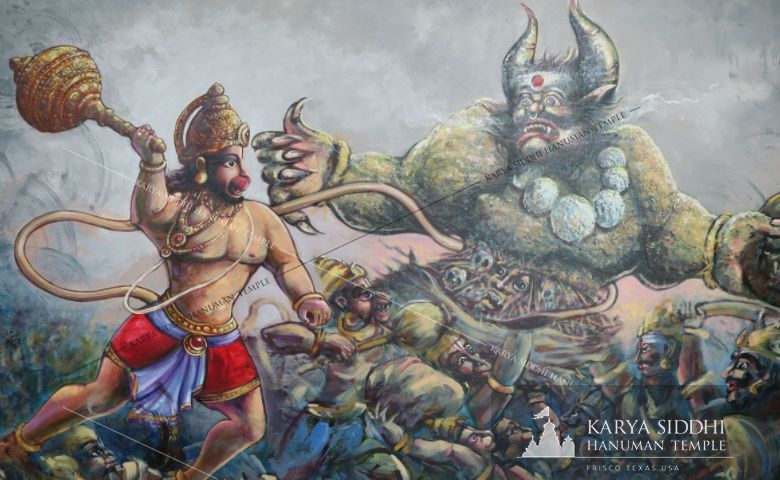
23. Śrī Hanumān battles demons in the fierce war
The great battle between the armies of Śrī Rāma and Rāvaṇa is described by scholars as complex, gruesome, horrible and fierce. It is described as: “rāma rāvaṇayōryuddham rāma rāvaṇayōriva”, meaning every battle pales in comparison to the fierce war between Śrī Rāma and Rāvaṇa.
In the Rāma Rāvaṇa battle, each Vānara soldier killed numerous rākṣasās (demons) while chanting “Jai Śrī Rām”. They demonstrated great powers, strength, valor and fought selflessly for their supreme Lord Śrī Rāmā’s victory. Hanumān killed countless demons in the battle including Rāvaṇā’s mightiest warriors like Nikumbha, Triśira and Dhūmrākṣa.
Much before the Rāma’s Rāvaṇa battle commenced, when Hanumān visited Sīta Dēvi in the Aśōkavana (garden) of Lanka city, Hanumān killed 80,000 Rāvaṇā soldiers; including great warriors like Jambumāli, Rāvaṇā’s chief minister Prahastā’s seven sons; five army generals of Rāvaṇa (foremost leaders commanding the troops) named Virūpākṣa, Yūpākṣa, Durdhara, Praghāśa and Bhāsakarṇa; and even Akṣa Kumāra, the son of Rāvaṇa.
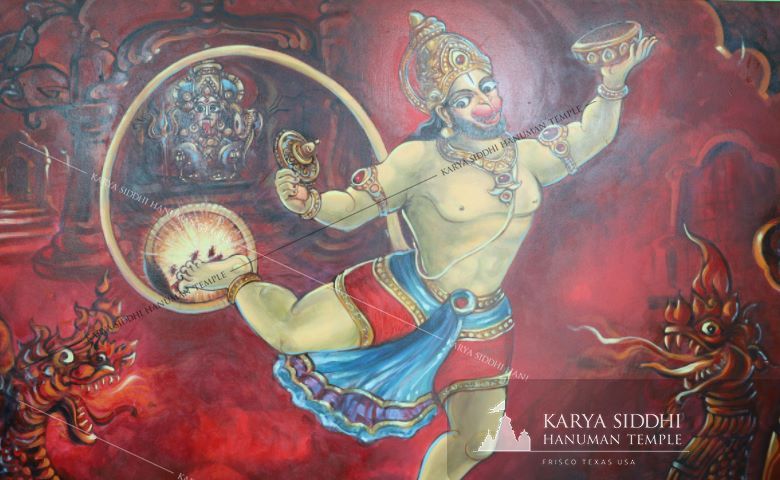
24. Śrī Hanumān kills Myrāvaṇa to free Śrī Rāma and Lakṣmaṇa
Every day the battle commences in the morning and is halted by sunset. Every night, Hanumān expands and curls his tail to form a makeshift fort around Śrī Rāma and Lakṣmaṇa to safeguard them.
One evening, when Hanumān was engrossed in chanting of Śrī Rāmā’s name, Myrāvaṇa deceitfully enters the fortified tail structure in the guise of Vibhīṣaṇa. With his evil magical powers Myrāvaṇa shrinks the sleeping Śrī Rāma and Lakṣmaṇa and locks them in a small box. He proceeds to take them to his home in the nether worlds and imprison them. When the real Vibhīṣaṇa visits Hanumān sometime later, and enquires about Śrī Rāma and Lakṣmaṇa, Hanumān gets suspicious. Soon they realize that Myrāvaṇa tricked Hanumān and abducted Śrī Rāma and Lakṣmaṇa. Hanumān rushes to ‘Pātāla lōka’ and learns that Myrāvaṇā’s prāṇa (life force) is held in the form of five bees. Due to a boon he has been granted, Myrāvaṇa can perish only when someone manages to crush the bees and his physical body at the same time. Hanumān achieves this great feat of killing Myrāvaṇa and releasing Śrī Rāma and Lakṣmaṇa.
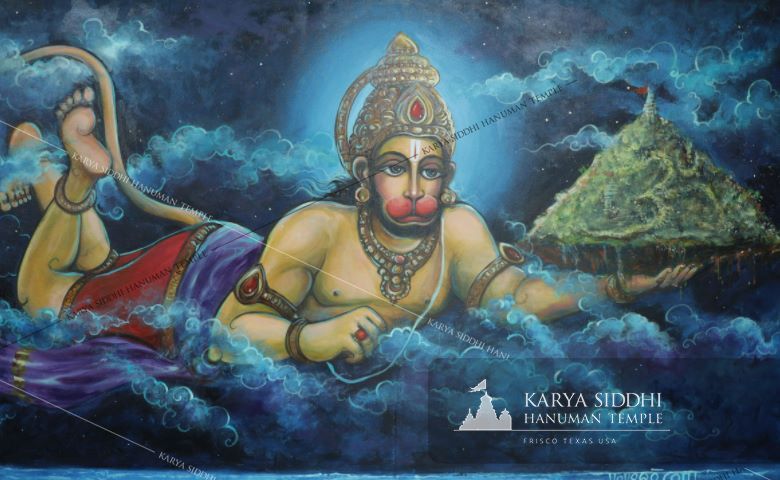
25. Śrī Hanumān carries the entire Sanjīvani mountain to Lankā’s battlefield
When Indrajīt attacks and injures Lakṣmaṇa by casting an evil spell, Hanumān brings the Sanjīvani mountain (magical mountain with healing powers) from Himālayās and protects Lakṣmaṇā’s life as well as resurrects countless Vānara soldiers who had perished in the war.
asmajjīvati vīrēti hatāmapyahatam balam | hanumatyujjyuhitā prāṇē jīvantō2pi hatā vayaṁ ||
Jambavān tells Vibhīṣaṇa thus: “if Hanumān is alive then everyone is safe in Śrī Rāmā’s army. Otherwise, even if everyone else is alive, they all will die soon, including myself!”.
Such is the faith that Jambavān has on Hanumān’s strength, intellect, and ability!
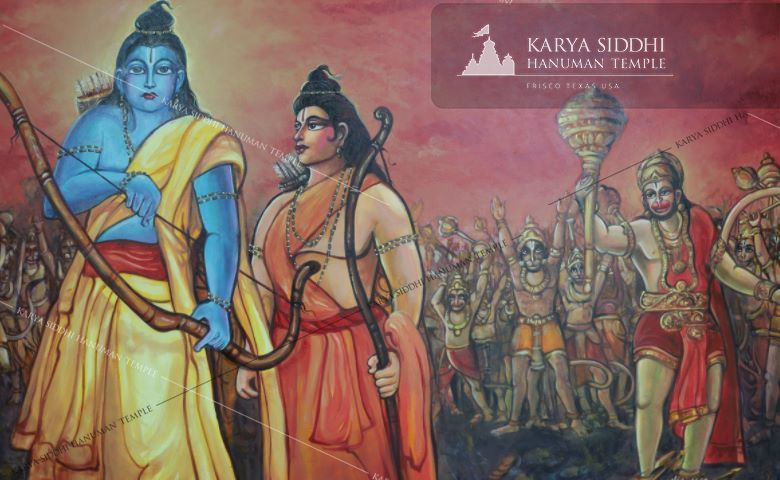
26. Śrī Hanumān & Vānarās sing the praises of Śrī Rāma and Lakṣmaṇa after victory
tatastu sugrīvavibhīṣaṇāngadāḥ suhṛdviśiṣṭāḥ sahalakṣmaṇāstadā | samētya hṛṣṭā vijayēna rāghavaṁ raṇē’bhirāmaṁ vidhinābhyapūjayan ||
Once the war was won, Hanumān, Sugrīva, Vibhīṣaṇa, Angada and all the Vānarās sang the glory and praised the victorious and valorous brothers - Śrī Rāma and Lakṣmaṇa.
sa tu nihararipuh sthirapratijnaḥ svajana balābhivr̥tō raṇē rarāja | raghukula nr̥panandanō mahujā stridaśa gaṇairabhisaṁvr̥tō yathēndraḥ||
Upholding his promise, Śrī Rāma killed Rāvaṇa. He stood in the battlefield surrounded by his own people and army, shining like Indra amidst celestials.
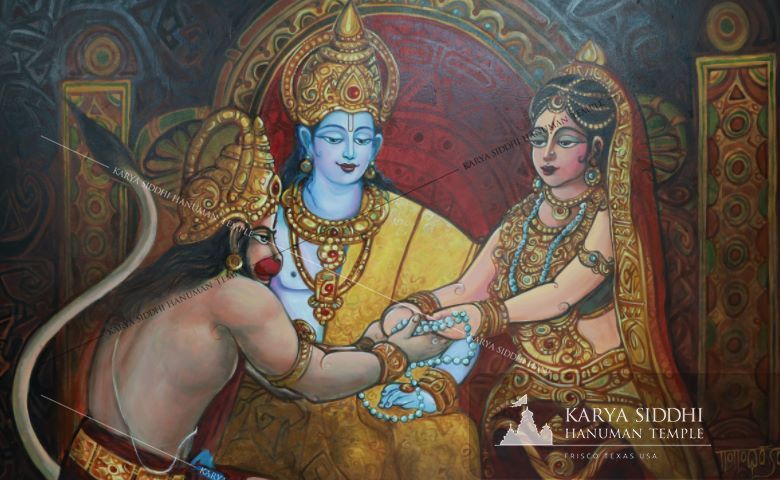
27. Śrī Hanumān receives the pearl necklace from Sītā Mātā at Śrī Rāma Paṭṭābhiśēka
After Śrī Rāmā’s Paṭṭābhiśēka (coronation ceremony) Sītā Dēvi wanted to gift a pearl necklace to the best amongst the entire assembled crowd.
pradēhi śubhagē hāram yasya tuṣṭāsi bhāminī | pauruṣaṁ vikramam buddhiḥ yasminntāni sarvaśaḥ ||
Śrī Rāma says: “O! blessed One! Gift it (the pearl necklace) to the one who has valor, strength and ability to forge ahead in any situation and is celebrated intellectually”.
Sītā Dēvi presents the pearl necklace as a loving gift to Hanumān in gratitude. Hanumān breaks each pearl with his teeth and discards them saying he does not see his Lord Śrī Rāma inside any of them!
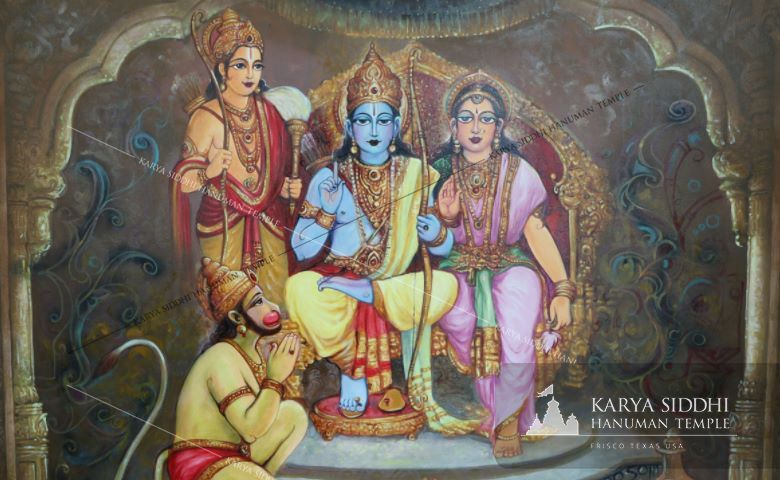
28. Śrī Rāma Parivāra – Śrī Rāma, Śrī Sītā Mātā, Śrī Lakṣmaṇa and Śrī Hanumān
After the royal coronation ceremony (Rājya Paṭṭābhiśēka), Hanumān bows to Śrī Rāma who is united with Sītā Mātā in the presence of Lakṣmaṇa. This supreme combination of the four - Śrī Rāma, Sītā Mātā, Lakṣmaṇa and Hanumān - is famously known as Śrī Rāma Parivāra.
There is spiritual significance in this concept. Śrī Rāma is ‘Puruṣa’ tattva. Sītā Dēvi is “Puruṣākāra”, i.e., the catalyst to invoke śakti (energy) in the Puruṣa. The meaning being, Śrī Rāma is dependent on Sītā Dēvi in order to to start His avatāra mission (Viṣṇu’s incarnation as Śrī Rāma). Sītā Dēvi as Lakṣmi (“viṣṇōranapāyinī”) always accompanies Śrī Mahā Viṣṇu in every incarnation. Sītā Dēvi belongs to Chandra Vamśa (lineage of moon) while Śrī Rāma belongs to Sūrya Vamśa (sun). Thus, Sītā Dēvi with the characteristics of the moon, has a cooling effect and balances the fire, i.e., agni tattva of Śrī Rāma. In the sacred name Rāma, the seed letter “ra” represents fire meant to destroy and burn up the rakṣasās (demons). Prefixing Rāma with the seed letter “Śrī” adds the coolness. This is why it is always recommended to chant Śrī Rāma.
Lakṣmaṇa is the incarnation of the Ādisēṣu (primordial celestial snake) on which Śrī Mahā Viṣṇu rests. He is required for Śrī Rāma to carry out and “execute” the avatarā’s (incarnation’s) mission.
The “vyūha catuṣṭaya”, i.e., the four avatara aspects of Śrī Mahā Viṣṇu are: Vāsudēva (the main one), Pradyumna (preservation), Sankarṣaṇa (destruction) and Aniruddha (creation). Lakṣmaṇa is the form of Sankarṣaṇa, the sustainer of the world. Hanumān is the Prāṇa śakti that unites and serves the jīvātma (Prakriti, Sītā Dēvi) and Pramātma (Puruṣa, Śrī Rāma).
Rāma Lakṣmaṇa Janakī! Jai Bōlō Hanumān Ki!
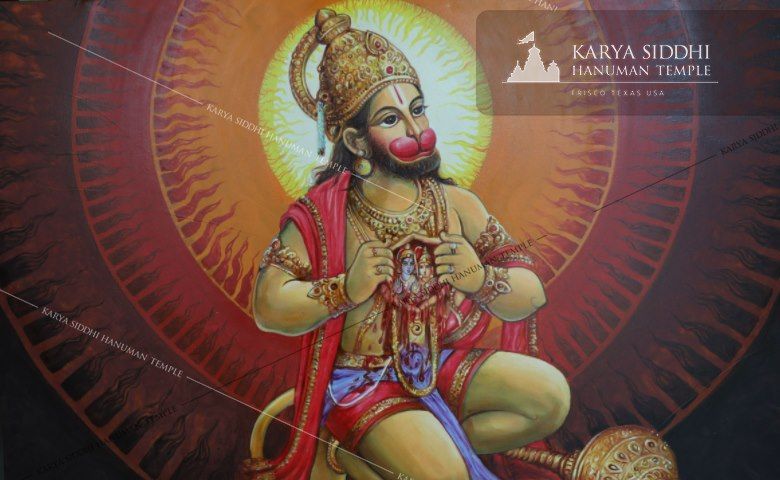
29. Śrī Hanumān tears his chest open to reveal Śrī Rāma & Śrī Sītā Mātā
After the coronation ceremony of Śrī Rāma, when Sītā Mātā gifted Hanumān with the pearl necklace, Hanumān could not find Śrī Rāmā in the pearls and was very disappointed. Sītā Dēvi is upset that such a fond gift that she has given Hanumān is destroyed. Hanumān then splits open his chest wide with his nails and reveals Śrī Rāma and Sītā Mātā as ever dwelling in his heart!
rōma rōmānkita rāma nāmāya namaha
There is a symbolic depiction (not mentioned in the Vālmīki Rāmāyaṇa) of how an ardent devotee should practice devotion with complete faith like Hanumān - who has Śrī Rāma nāma vibrating through each blade of hair on his body.
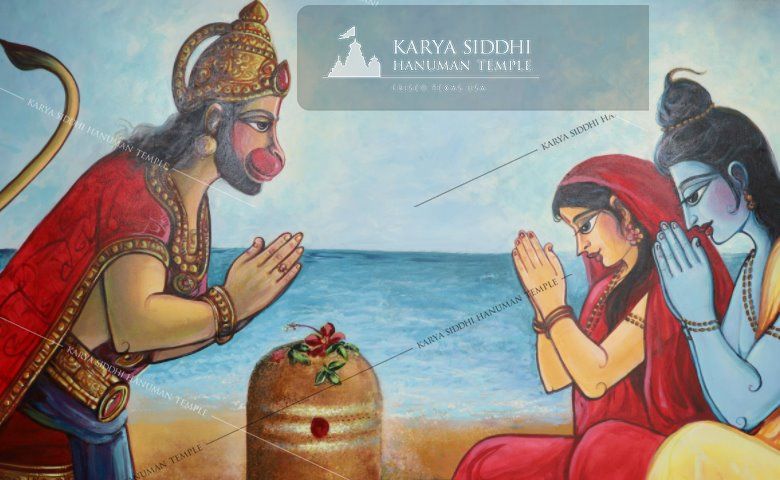
30. Śrī Rāma and Śrī Sītā Mātā worship Śivalinga near Rāmēśwaram with Śrī Hanumān
After the victory in the battle Śrī Rāma along with Sītā Mātā was returning to Ayōdhya in the Puṣpaka Vimāna (celestial mystic aircraft). On the way, they stop at Rāmēśwaram located at the tip of the Indian peninsula. Śrī Rāma along with Sītā Mātā worships the “saikata linga” – Śiva linga made of sand from the banks of the ocean.
Śrī Rāma killed the great ‘Brahma Rākṣasa’ Rāvaṇa, who is also *‘Rāvaṇa Brahma’. * Śrī Rāma wanted to worship Śiva at this location to get rid of the sin incurred for killing a brahmin (Brahma hatya).
There is a beautiful story of Hanumān failing to lift the Saikata Śiva Linga with his tail after multiple tries. Hence, the Rāmalingēśwara has impressions made by the tail of Hanumān. The subtle significance is that both Viṣņu energy of Śrī Rāma and Śiva energy of Hanumān are instilled in this wonderful Śiva linga to bless all the devotees abundantly.
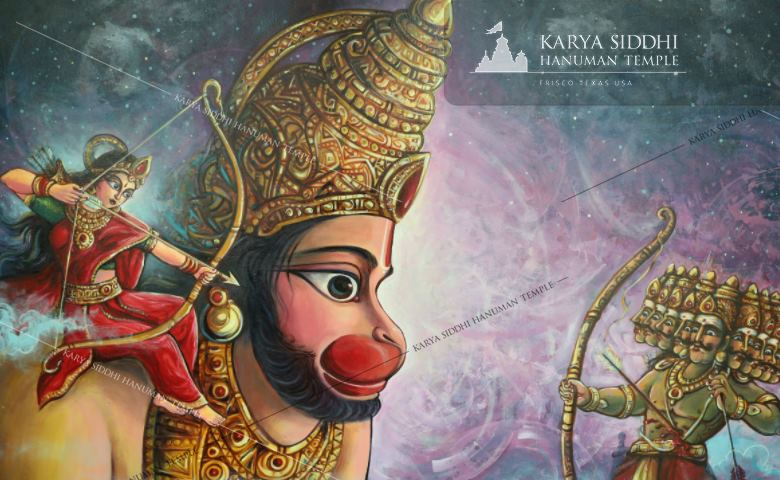
31. Śrī Sītā Mātā kills Śatakanṭha Rāvaṇa with Śrī Hanumān’s support
After Myrāvaņa is killed in the Pātāla lōka (nether world) by Hanumān, and Daśakanṭha Rāvaṇa (ten-headed) is annihilated by Śrī Rāma on earth, Sītā Mātā kills Śatakanṭha Rāvaṇa (hundred headed) dwelling in space. It is to be noted that the killing of Myrāvaņa and Śatakanṭha Rāvaṇa is not mentioned in the Vālmīki Rāmāyaṇa.
Sītā Dēvi, as the primordial energy (Ādi Śakti) along with the divine energy in the form of Kāļikā Dēvi, assisted by Hanumān kills Śatakanṭha Rāvaṇa. During the fierce battle that ensued Hanumān assists Sītā Mātā whilst she delivers the deadly arrow that kills Śatakanṭha Rāvaṇa. Kāļikā Dēvi swoops and swallows the entire blood to ensure not even a single drop falls on the ground thus preventing Śatakanṭha Rāvaṇa regenerating himself automatically.
Thus, assisted by both Hanumān and Kāļikā Dēvi, Sītā Mātā kills Śatakanṭha Rāvaṇa.
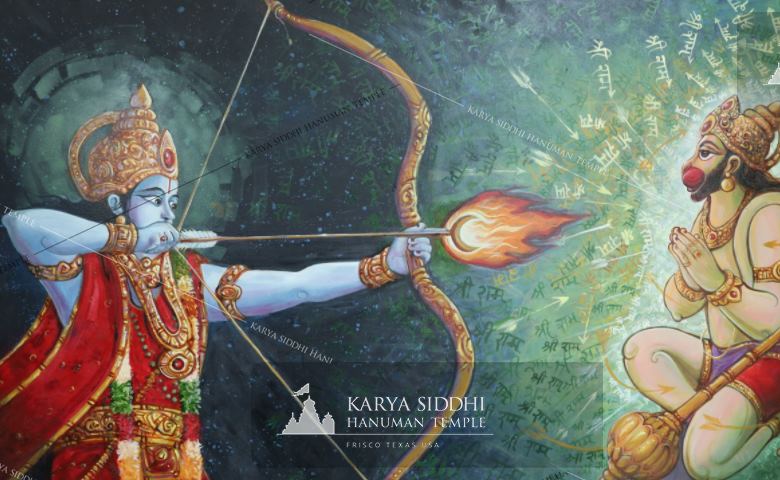
32. Śrī Hanumān proves that Śrī Rāma nāma is more powerful than Śrī Rāmā’s arrows
A king named Yayāti takes refuge in Hanumān’s mother Anjanā Dēvi and asks for protection without informing her the details of the danger he was experiencing. She gives her solemn word to protect him. Then Yayāti informs that upon Sage Viśwāmitrā’s instruction, Śrī Rāma takes a vow to kill Yayāti (due to the pious mischief of Nārada Mahaṛṣi, which always yields benevolent results to the world).
Anjanā Dēvi orders her beloved son Hanumān to protect Yayāti. This is a very difficult situation for Hanumān as he has to fight against his own Lord Śrī Rāma. Hanumān instructs Yayāti to keep chanting Śrī Rāma Nāma constantly and keeps guard.
Śrī Rāma arrives and prepares to kill Yayāti. Hanumān intervenes saying it is his duty (ordered by Śrī Rāma) to protect whoever is chanting the Śrī Rāma Nāma. Thus, Śrī Rāma has to fight Hanumān first before killing Yayāti. Hanumān without yielding any weapon continuously chants Śrī Rāmā’s name with steadfast devotion. Śrī Rāma launches numerous arrows at Hanumān in vain. Viśwāmitrā arrives and frees Śrī Rāma from his promise to kill Yayāti.
It is to be noted that this episode is not in the Vālmīki Rāmāyaṇa and is solely aimed at highlighting the fact that chanting Śrī Rāma’s name is more powerful compared to Śrī Rāma himself!
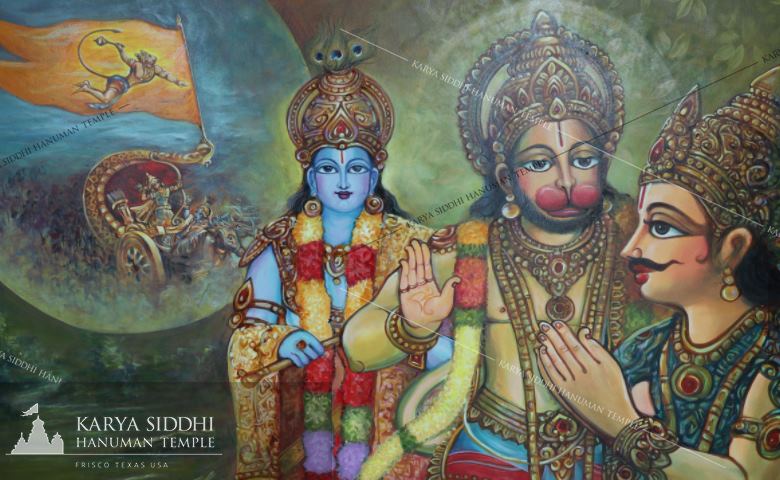
33. Śrī Hanumān grants a boon to reside on Arjunā's chariot Dhwaja during the Mahābhārata war
Once Arjuna had an intense argument with Hanumān. Hanumān challenges Arjuna to build a bridge across the ocean that is strong enough to carry the weight of the entire Vānara army that had crossed the mighty ocean during the Śrī Rāma Rāvaṇa battle. Hanumān then sits in a secluded spot chanting Rāma Nāma completely ignoring Arjuna. Arjunā’s ego is hurt and he repeatedly tries to build the bridge on the sea with his powerful arrows. Every time Hanumān steps on the bridge, it collapses. Arjuna is unable to comprehend as to why all his astrās (weapons invoked by mantrās) are landing in vain. Arjunā’s ego is completely destroyed. Śrī Kṛṣṇa also present there gleefully witnesses the whole event. Arjuna prays to Śrī Kṛṣṇa and upon his advice rebuilds the arrow-bridge while chanting Śrī Kṛṣṇā’s name with utmost devotion.
Hanumān steps on to the bridge again. This time the bridge does not collapse. Hanumān is very surprised. Hanumān starts jumping on the bridge with all his strength in order to destroy it. Hanumān quickly realizes that the bridge is being protected by some supreme power and prays to Śrī Kṛṣṇa. Both Arjuna and Hanumān approach Śrī Kṛṣṇa who teaches them that it is only pure devotion and complete self surrender that makes a devotee unconquerable in this entire universe. Hanumān, pleased with Arjuna, blesses him with a boon that he would reside on the Dhwaja (flag) on top of Arjunā’s chariot during the Mahābhārata war and protect Arjuna.
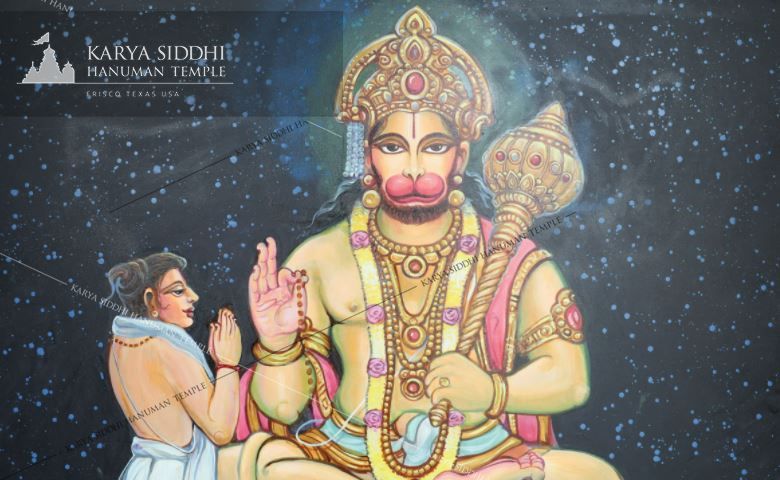
34. Devotee Mainda offers salutations to Śrī Vīra Hanumān
In the Parāśara Samhita, a great devotee, Maindā's story is described in detail.
Once, Mainda was crossing the river Ganga in a boat to reach Kāśi. In the middle of the journey, the boat developed holes and water started sinking the boat. Mainda covered his face with a cloth and immersed himself in chanting the Hanumān mantra. Mainda had done severe penance, chanting aṣṭadaśākṣari (18 lettered) and catravimśatyākṣari (24 lettered) mantras of Hanumān. To the surprise of everyone present, a gigantic monkey (Hanumān) is witnessed carrying the boat on his head and reaching the shore. Hearing this, Mainda felt sad that he did not have the darśan of Śrī Hanumān despite being his ardent devotee. Hanumān blesses Mainda with his rare divine vision having four hands, adorning silk clothes and a beautiful smile. Mainda worshiped Hanumān with great devotion and happiness. Pleased with him Hanumān grants him a boon to enjoy all the riches in this world and salvation beyond. Thus blessing his dear devotee Mainda, Hanumān vanished.
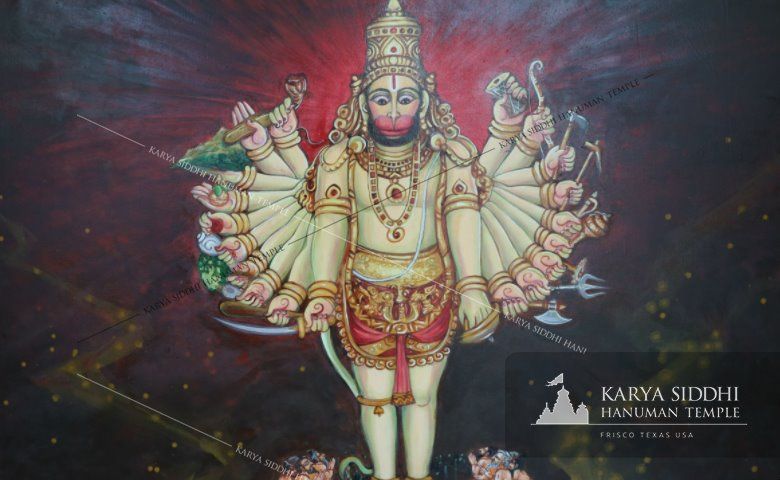
35. Mahaṛṣī’s offer salutations to Śrī Vimśati Bhuja Hanumān
There are nine divine manifestations of Hanumān known as ‘Nava Avatāra’. The first form is known as Prasanna Ānjanēya. The second form is known as Vīrānjanēya. Hanumān’s form with twenty-hands is known as Vimśati Bhuja Ānjanēya. This is the third form of the Nava Avatārās. Hanumān appeared in this divine form in the Brahma lōka. Brahma Dēva and the seven great Rishis (saptaṛṣīs) worshiped this twenty-armed form.
purā brahmā mahtsāhaścaturmukha iti śṛttaḥ | mārutiṁ viṁśati bhujaṁ upāsyā2pi prajāpatiḥ ||
Once the four-faced Brahma (caturmukha Brahma) worshiped this form of the twenty-armed Hanumān and by Hanumān’s grace obtained the status and role of Prajāpati.
This form also is indicative of the fact that Hanumān will be the future Brahma.
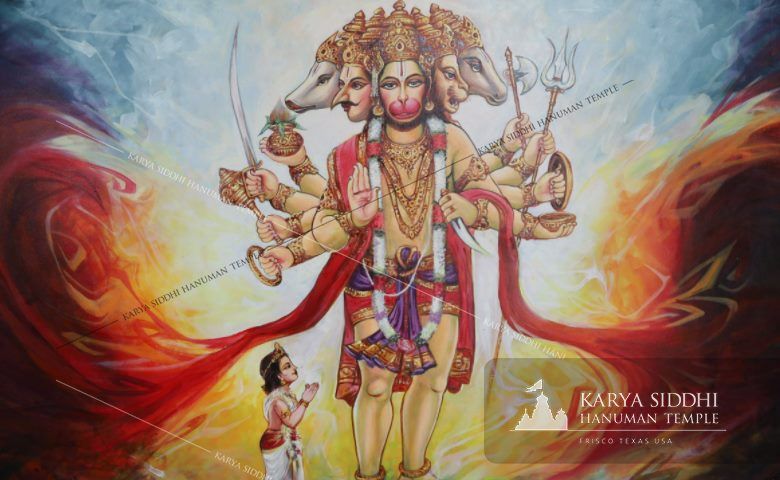
36. Nīla, the son of Vibhīṣaṇa, offers salutations to Śrī Panchamukha Hanumān
Nīla is the son of Vibhīṣaṇa. After Rāvaṇa is killed by Śrī Rāma, the Lanka kingdom was full of peace and prosperity under Vibhīṣaṇā’s rule. One day his son Nīla asked Vibhīṣaṇa that he would like to win over Indra and bring the three wish fulfilling objects from the heavens: the Chintāmaṇi jewel, the Kalpa vṛkṣa and the Kāmadhēnu.
As directed by Vibhīṣaṇā, Nīla serves his guru Śukrāchārya for about twelve years with full dedication and obtains the mantrā initiation for Śrī Panchamukha (five-faced) Hanumān - the fourth form in the Nava Avatārās. Nīla performs severe penance by chanting the sacred and powerful mantra. He obtains siddhi (the fulfillment of the mantra thus yielding results). Hanumān gives his darśan to Nīla and blesses him that he will not only win over Indra in battle but also obtain Brahmā’s boons. Hanumān asked Nīla to attack the heavens the very next day. Nīla attacks and wins against Indra by the power of the Hanumān mantra. When Nīla was about to behead Indra with his sword, Brahma appears and stops Nīla. Brahma convinces Indra to give the Chintāmaṇi jewel, the Kalpa vṛkṣa and the Kāmadhēnu to Nīla. Additionally, Brahma blesses Nīla with a very beautiful apsarasa named Vana Sundari who had manifested from Atri Mahaṛṣi’s penance energy. Nīla marries her and returns to Lanka victorious.
Nīla worshiped Panchamukha Hanumān at Nīlachala, currently located in Puri, Orissa, India
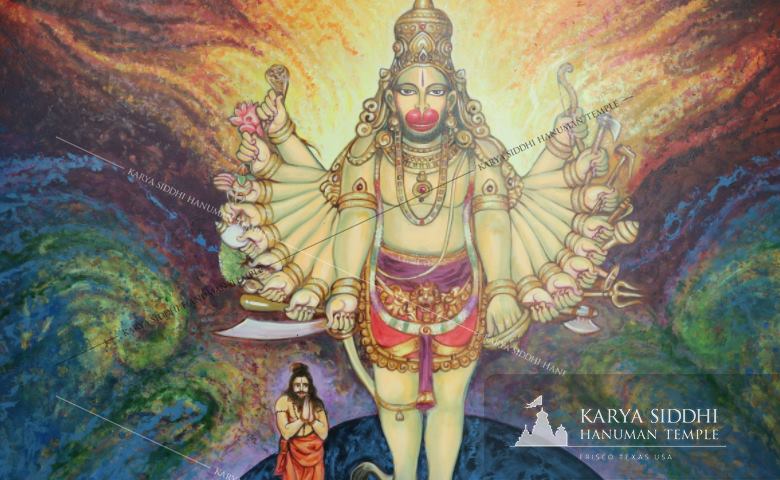
37. Durvāsa Mahaṛṣi offers salutations to Śrī Aṣṭādaśa Bhuja Hanumān
Durvāsa Mahaṛṣi worshiped the eighteen-armed Hanumān. This is the fifth form of Hanumān in the Nava Avatāra’s.
Garga Samhita recites a beautiful story. Sage Durvāsa sustains himself mainly on the juice made of Dūrva (wheat) grass. He is a “Parama hamsa”, an all-renounced Mahaṛṣi.
Once Durvāsa Muni ate an enormous feast in the Brindāvana forest, hosted by the Gōpikās. The Gōpikās cooked huge quantities of different kinds of dishes and prayed that the Muni should eat from each one of them. Durvasa opened his mouth wide and ate the thousands of varieties of items fed by the Gōpikās directly into his mouth. He did not desire to eat but did so as to bless the Gōpikās pleased with their sincere and pure devotion.
Such are the divine acts (līla’s) of great sages like Durvāsa in order to bless the worlds. It may seem as if Durvāsa appeared greedy and starving with hunger in this story, but all the actions of such great sages are only for the benefit of the world.
The Parāśara Samhita mentions: upāsyādaśṭa bhujam hanūmantaṁ mahāprabhuṁ | lēbhē parama lōbhitvaṁ dūrvāsō lōka viśr̥taḥ ||
By worshiping Hanumān who has eighteen-arms, the sage Durvāsa became famous for blessing and helping all living beings.
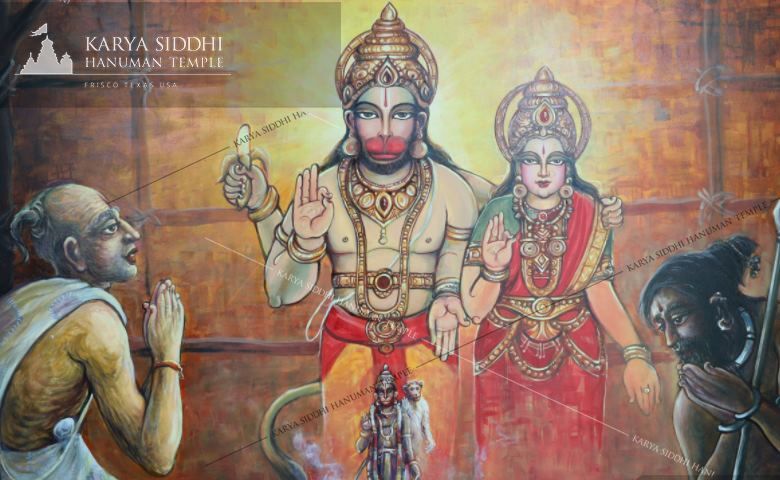
38. Devotees Dhvaja Datta and Gāla pray to Śrī Suvarchala Hanumān
Dhvaja Dattā’s story:
There was a poor Brahmin who was a highly educated Vedic scholar. Unable to bear his poverty, he approached a Guru by the name Puṣkara. Guru Puṣkara initiated him into a divine 12 syllable (seed letter) Hanumān mantra. Dhvaja Datta performed an extended mantra recitation and chanted the mantra to the count of one lakh for each seed letter present in the mantra (Puraścharana). Dhvaja Datta did not see any favorable results and was dejected. There were two faults in his sadhana (spiritual austerities): Firstly, he did not meditate on his Guru before chanting the mantra and secondly, he lacked faith in the mantra.
Dhvaja Datta learns from his mistake and with total faith chants the mantra and gets rid of his poverty. He lives happily ever after.
Gāla’s story:
A tribal named Gāla, suffering from chronic disease approaches Guru Puṣkara and sincerely serves him. He receives Hanumān mantra as initiation. Gala quickly attains favorable results (siddhi) just by chanting the mantra 108 times! Gāla got rid of his disease and got prosperity by Śrī Hanumān’s blessings. This is because of his utmost faith in his Guru Puṣkara and in the mantra.
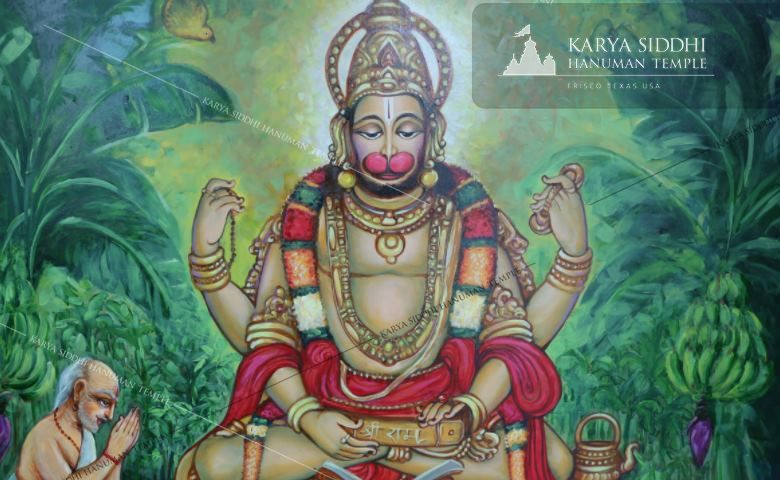
39. The devotee Kapila offers salutations to Śrī Chaturbhuja Hanumān
Kapilā’s story:
Once there was a poor Brahmin who was an ardent devotee of Śrī Hanumān. Kapila was constantly worshiping Śrī Hanumān, who suddenly appeared before Kapila and enquired about his welfare and offered boons to him. The poor Brahmin said that he is not desirous of any boons and asks for pure devotion at Śrī Hanumān’s Lotus Feet. The all-knowing Hanumān then enquires about Kapilā’s wife’s desire for any wishes. Kapila says to Hanumān that due to extreme poverty and starvation of his entire family including the kids, his wife is dejected and angry. The ever merciful Hanumān advises that Kapila should inform his wife to dig for a treasure hidden at the base of the jāmun tree (black plum) in their backyard. When Kapila informs his wife about the same, she does not believe him and mocks that Hanumān himself could have dug and brought the treasure to her instead!
The all merciful Hanumān along with Kapila goes to the base of the tree in the backyard and lifts the treasure up from the earth by pressing His divine feet near the base of the tree. Hanumān orders Kapila to place the treasure pot on his head. Kapila denies with utmost respect. At that time Kapilā’s wife was in deep sleep. The all compassionate Hanumān places the treasure close to Kapilā’s wife, blesses Kapila that he would attain liberation at the end of his current life and vanishes. In the morning Kapilā’s wife realizes the miracle and attributes it to the power of her husband’s penance and apologizes.
They lived happily after and Kapila attained liberation at the end of his life.
40. Devotee Sōmadatta offering salutations to Śrī Hanumān
Sōmadattā’s story:
Sōmadatta learnt about Nīlā’s story from his Guru – the great Sage Garga Mahāmuni. Realizing how Nīlā had attained success (siddhi) by worshiping the five-faced Hanumān (panchamukha), Sōmadatta took initiation of the Hanumān mantra from his Guru. He learnt about the procedure for the Śrī Hanumat Vrata (severe austerity) from his Guru. With the Blessings of Śrī Hanumān, Sōmadatta performed the Vrata and obtained longevity, a handsome appearance, and a powerful sword. Within a span of just a day he won over all his enemies. Sōmadatta ruled the entire earth for 300 years righteously and crowned his eldest progeny(out of eight sons) as the King. Sōmadatta attained Brahmalōka (superior to heaven) at the end of his life. The power of Hanumān’s worship and Vrata is such! Sōmadattā’s story glorifies the efficacy of Śrī Hanumān Vrata.
Maintaining cleanliness, adorning the holy ‘tōram’ (sacred thread) one one’s wrist, one must perform this powerful Vrata that worships Hanumān. One should never come in contact with impure things and follow all the rules required for the Vrata. When performed with determination and devotion, the Hanumān Vrata bestows prosperity, longevity, success, fulfillment of wishes and grants liberation. It is beneficial to perform the powerful Hanumān Vrata whenever the five constellations of Mrigasīrśa, Ārudra, Punarvasu, Puśyami, and Hasta occur in the lunar calendar.
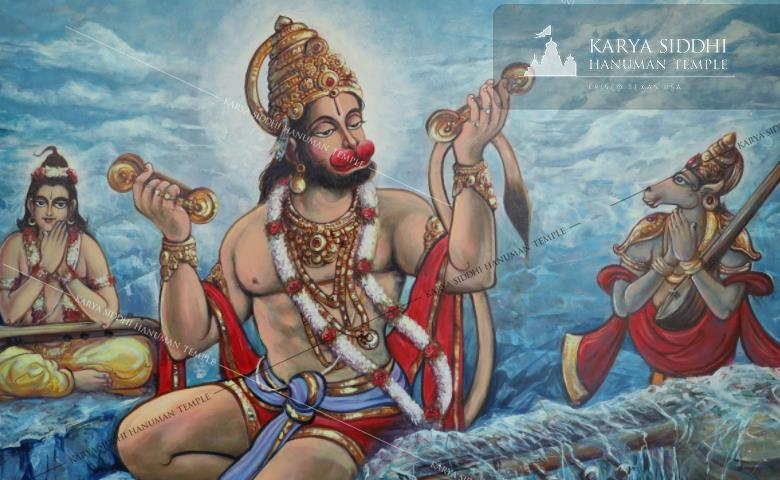
41. Śrī Nārada and Tumbura humbly pray to Śrī Hanumān after his melodious singing melted the frozen Vīna
'na’kāraṁ prāṇa nāmānaṁ 'da’kāramanalaṁ viduḥ | jātaḥ prāṇāgni saṁygāt tēna nādō2bhidīyatē ||
The seed letter “na” represents Prāṇa (the vital life force). The seed letter “da” represents fire. The unification of Prāṇa and fire is called “nāda”. The entire universe manifested from nāda (sound). Hanumān is nāda personified.
Once, sages Nārada and Tumbura argue as to who amongst them is the musical expert and best singer. They proceed to the Himālayās to meet Śrī Hanumān for a resolution to their argument. Both claim that he is better than the other in singing. Hanumān wanted to teach them a lesson. Himālayās are always covered in snow and ice. Hanumān brought the special Vīna (stringed instrument) used by Nārada and placed it on a big block of ice. Hanumān started singing the Rāma nāma with complete devotion. To the amazement of Nārada and Tumbura, the huge ice block melted and the Vīna slid inside and froze. Hanumān stopped singing and asked them to sing and melt the ice so that the Vīna could be taken out. Both tried their level best and failed. They immediately realize their mistake as well as the greatness of Hanumān. They pray to Hanumān, who sings once again with total devotion. The ice instantly melted and the Vīna could be taken out. Having learnt their lesson and their ego destroyed, they humbly bowed to Hanumān and left.
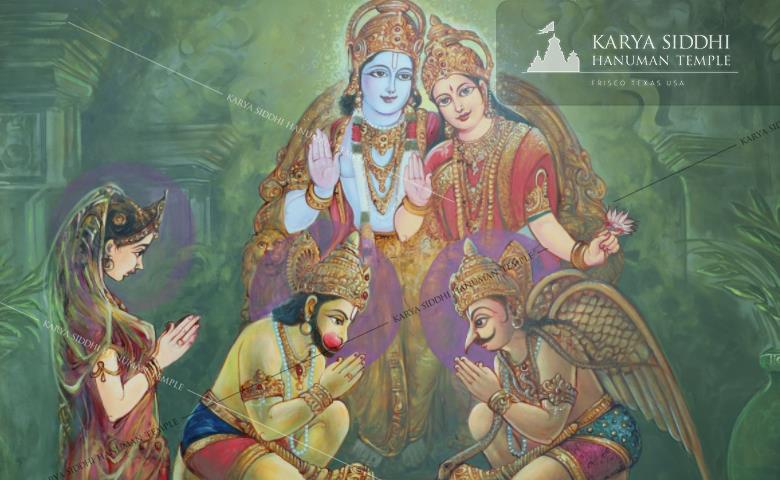
42. Śrī Hanumān, Śrī Garuḍa, and Śrī Satyabhāma worship Śrī Kṛṣṇa and Rukmiṇi Mātā
Destruction of Satyabhāmā and Garuḍā’s ego:
One day in the Dvāpara yuga, Garuḍa filled with arrogance, thinks that no one in the world is mightier or superior to him, for he is the vehicle for Śrī Nārāyaṇa himself. Śrī Kṛṣṇa in order to teach Garuḍa a lesson, orders him to go to the Gandhamādana mountains and bring Hanumān to Dwāraka. Garuḍa reaches Gandhamādana and asks Hanumān to come as per Śrī Kṛṣṇā’s order. Immersed in Śrī Rāma Nāma, Hanumān ignores Garuḍa. His pride hurt, Garuḍa insults Hanumān by tickling his nose and ears with his sharp long nose. Hanumān’s peace gets disturbed and he starts taking deep breaths. Garuḍa keeps getting sucked in whenever Hanumān inhales and hurled away during the exhalation. Garuḍā’s body is thrown around and starts aching. After a while Hanumān stops. The angry Garuḍa rises high in the sky and expands his body to carry Hanumān away. Hanumān elongates his mighty tail and hits Garuḍa who falls in the Svēta dwīpa (island) and drowns in the Kṣīrasāgara. Having learnt his lesson, Garuḍa leaves to see Śrī Kṛṣṇa who sends him back once again to bring Hanumān. But this time Śrī Kṛṣṇa advises Garuḍa to chant Rāma Nāma and invite Hanumān saying Śrī Rāma and Sītā Mātā request his presence. Garuḍa complies and instantly Hanumān accompanies Garuḍa and reaches Dwāraka.
Meanwhile, Śrī Kṛṣṇa plans to test Satyabhāma and destroy her ego. Kṛṣṇa transforms himself into Śrī Rāma and asks Satyabhāma to transform herself to Sītā Dēvi. She was unable to and concurs that its an impossible task for even Rukmiṇī Dēvi. Śrī Kṛṣṇa requests Rukmiṇī Dēvi to do the same and she transforms as Sītā Dēvi immediately. Dwāraka transforms to Ayōdhya. Hanumān feels immensely blessed and elated to have the darśana of Śrī Rāma and Sītā Dēvi. Śrī Rāma gifts a garland to Hanumān and asks him to return to Gandhamādana.
Thus, both Satyabhāmā and Garuḍā’s have their ego destroyed by the power and devotion of Hanumān.
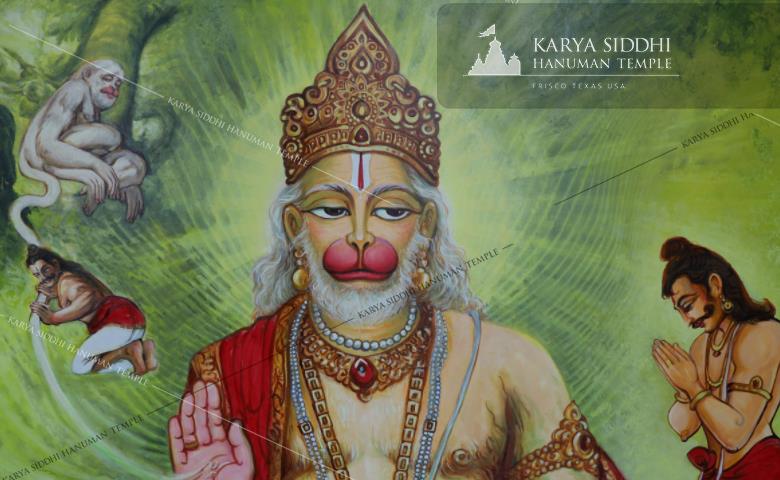
43. Bhīmasēna garva bhanga by Śrī Hanumān
There are two versions of this story in prevalence.
One version of the story states that Bhīmasēna, full of ego, in order to fulfill Draupadī’s unique wish, sets out for the impossible task of finding the elusive “Saugandhika” flowers.
The second version of the story is from the Parāśara Samhita. Bhīmasēna, filled with ego, wants to gift his brother, Emperor Dharmarāja something extraordinary and sets out to bring “Puruṣa Mriga” from the heavens.
Regardless of the versions, the conclusion of both the stories is the same. Hanumān, as an elder brother to Bhīmasēna (both are celestial sons of the wind-God Vāyu), wants to teach Bhīmasēna a lesson in humility and destroy his ego.
Hanumān takes the form of a gigantic elderly monkey and lays down on the ground obstructing Bhīmasēnā’s path with his huge tail. Bhīma egotistically orders the aged monkey to move the tail obstructing the pathway. The aged monkey cites weakness and requests Bhīma to push aside its tail and proceed. Bhīma tries to set the tail aside with a single finger and fails. Even after applying his entire strength and force Bhīma is unable to move the tail even an inch. Exhausted, Bhīma quickly realizes that this extraordinary monkey can only be Śrī Hanumān. Bhīma praises and prays to Hanumān to reveal his true form. Upon Bhima’s request, Hanumān reveals his magnificent, colossal and brilliant form (Viśwarūpa) taken while leaping across the ocean in search of Sītā Dēvi. Hanumān showers his blessings on Bhīmasēna so that he succeeds in his current task (bring Saugandhika flowers or the Puruṣa Mriga). Hanumān also supremely blesses Bhīmasēna with multi-fold elephantine strength and ensures victory in the upcoming Mahabharata war.
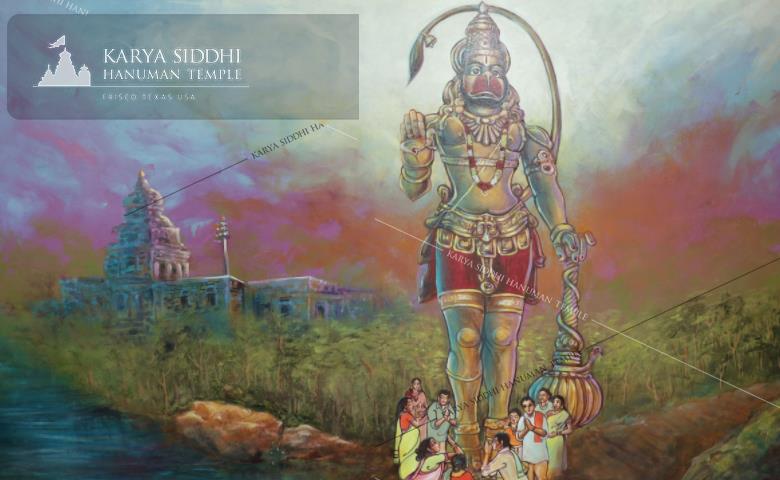
44. Śrī Hanumān’s Viśvarūpa darśana
Upon Bhīmasēnā’s ardent prayers, Hanumān reveals his magnificent, colossal and brilliant form (Viśwarūpa) taken while leaping across the ocean in search of Sītā Dēvi. Hanumān showers his blessings on Bhīmasēna so that he succeeds in his current task (bring Saugandhika flowers or the Puruṣa Mriga).
Hanumān also supremely blesses Bhīmasēna with multi-fold elephantine strength and ensures victory in the upcoming Mahabharata war.
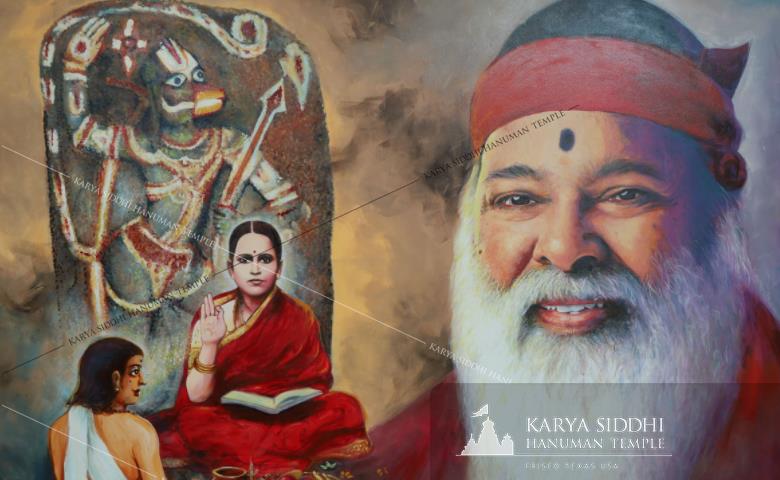
45. Divine initiation of HH Śrī Swāmiji in his youth by Śrī Jayalakṣmi Mātā
In the year 1953, Parama Pujya Śrī Gaṇapathy Sachchidānanda Swāmiji’s Mother and Guru Śrī Jayalakṣmī Mātā, stepped into the Hanumān temple near their home in Prodduṭūr. It was the auspicious time of Lingōdbhava (midnight) on the holy day of Mahā Śivarātri. The ten year old Satyanārāyaṇa, as the young Swāmiji was then known, silently followed his mother into the temple. Jayalakṣmi Mātā enters the sanctum sanctorum and stands aside. At the auspicious moment of Lingōdbhava, Jayalakṣmi Mātā lifts her right hand and presses the crown portion of Satyanārāyaṇā’s head. Satyanārāyaṇa experiences a strange sensation of an inexplicable divine force entering him and conducting the cosmic dance of Śiva. The entire universe appeared at once beautiful and very pleasing. Jayalakṣmi Mātā realizes that the divine force had entered and remained permanently in her son. Satyanārāyaṇa offers his humble prostrations to her.
This painting depicts the supremely blessed event of Śrī Hanumān being the witness to the divine Śrī Vidya initiation by Śrī Jayalakṣmi Mātā to the young Satyanārāyaṇa.
Śrī Swāmiji established several Hanumān temples across various countries in the world, including the magnificent Kārya Siddhi Hanumān Temple in Frisco, TX.
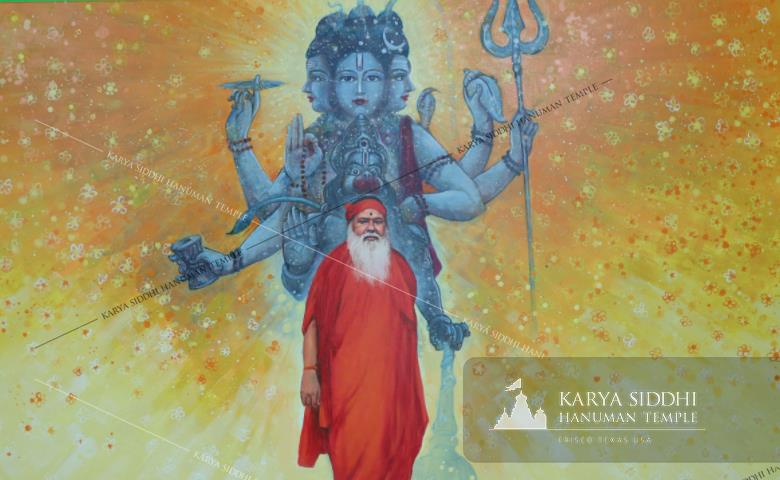
46. Śrī Dattātrēya, Śrī Hanumān & HH Śrī Swāmiji
Parama Pujya Śrī Gaṇapathy Sachchidānanda Swāmiji, one of the greatest spiritual leaders of the present day is an asset to India and the world at large. He is an incarnation of the great cosmic energy. Revival of culture, reformation of society, establishing peace and happiness, bringing transformation in mankind is His mission. He was born fully realized - in command of the eight Mahāsiddhīs. He is a Guru from the Dattātrēya Avadhūta lineage.
HH Śrī Swāmiji has built more than 77 Datta temples, established hundreds of Gñāna Bōdha Sabhās & consecrated several temples including Hanumān temples throughout the world for the benefit of mankind.
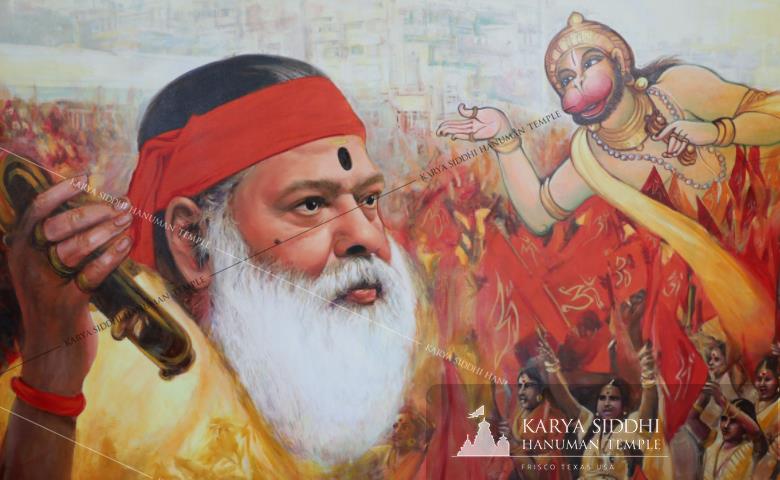
47. Śrī Hanumān Chālisa Pārāyaṇa Mahayaga by HH Śrī Swāmiji
Parama Pujya Śrī Gaṇapathy Sachchidānanda Swāmiji has always been propagating the Hanumān Chālisa for over a decade, ever since the consecration of 85 foot Hanumān in Trinidad.
HH Śrī Swāmiji’s mission of chanting the powerful Hanumān Chalisa on a massive scale, resulted in a record count of more than 1008 crores being chanted worldwide in a period of 15 months.
Śrī Swāmiji’s leading of the Hanumān Chālisa with a massive congregation of 128,918 (with a final count of around 220,000) people in Tenali, Andhra Pradesh set the Guinness World Record for most people chanting.
Śrī Swāmiji’s says mass chanting creates immense positive vibrations which spread across every part of the region, country and universe. This spiritual vibration creates a sense of peace, tranquility and is essentially required for peace in the entire universe.
Śrī Swāmiji decided to conduct mass Hanumān Chālisa chanting – “Śrī Hanumān Chālisa Mahā Yagna” in different parts of the world.
A Guinness World Record for the longest continuous chanting marathon was conducted on August 1st 2015 at the Kārya Siddhi Hanumān Temple, Frisco TX. Guinness World Records confirmed to The Huffington Post that the Temple set the “World Record for Longest Continuous Chant”, which lasted for 24 hours, 10 minutes and 8 seconds.
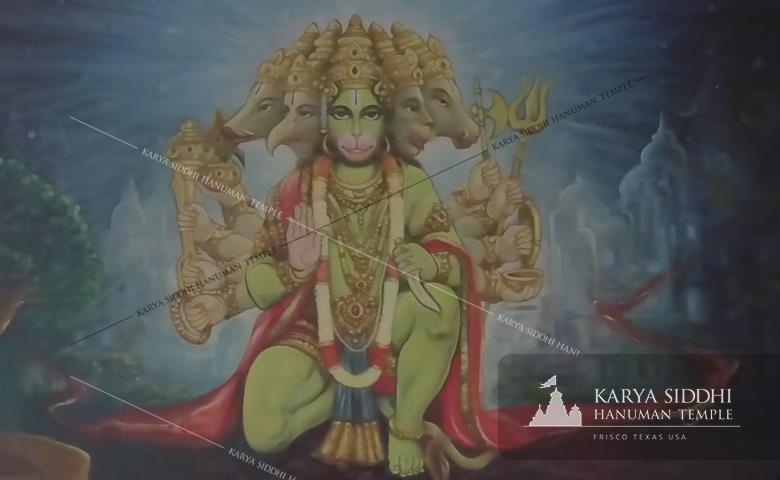
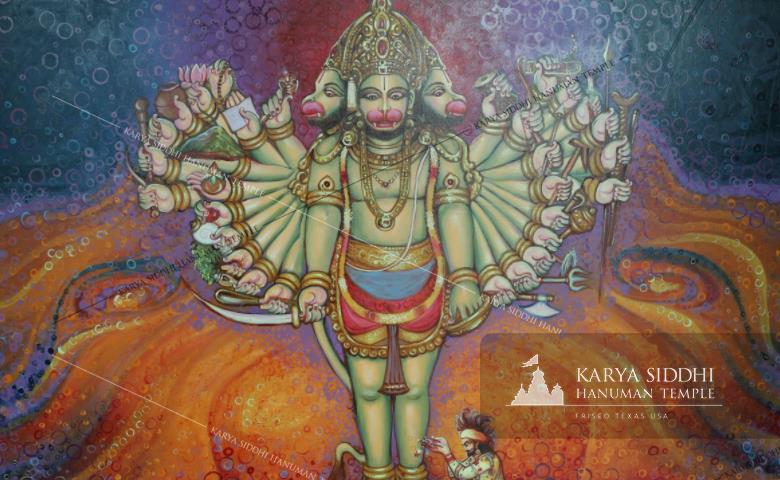
48. Śrī Panchamukha Hanumān
vandē vānara nārasiṁha khagarāṭ krōḍāśva vaktrāncitaṁ nānālaṁkaraṇaṁ tripaṁca nayanaṁ dēdīpyamānaṁ rucā | hastābjairasi khēṭa pustaka sudhākuṁbhāṁkuśādrīn halaṁ khaṭvāṁgaṁ phaṇi bhūruhauca dadhataṁ sarvāri garvāpahaṁ ||
Salutations to Panchamukha Hanumān:
- who has the five faces depicting Vānara (divine monkey God), Nārasiṁha (divine form of man-lion), Garuḍa (divine eagle), Krōḍa / Varāha (divine wild-boar), Aśva (horse headed - hayagrīva);
- who is decorated with various ornaments;
- who has 15 shining and resplendent bright eyes (3 eyes times 5 faces);
- who is holding in his ten hands - a sword, sheath, book, divine pot of nectar, goad, hill, plough, club weapon shaped like the foot of a bedstead, snake, and a tree;
- who shatters the ego of all enemies.