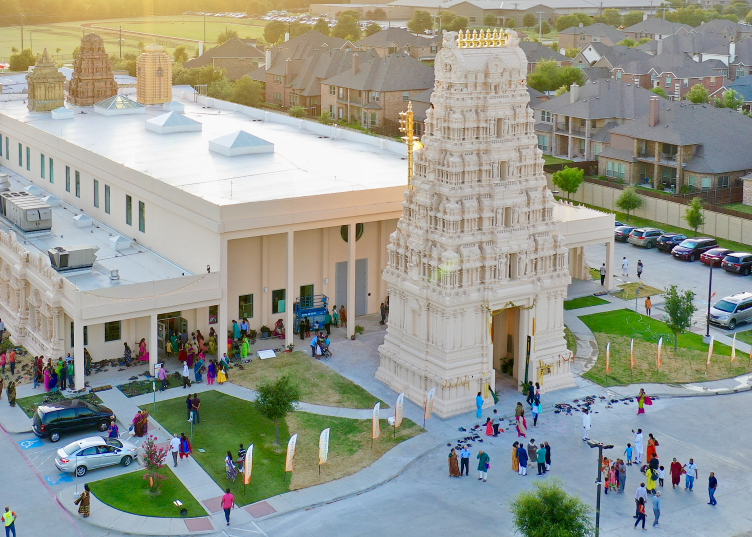
Rajagopura was Inaugurated on July 20th, 2019

History and Architecture of KSHT Rajagopura

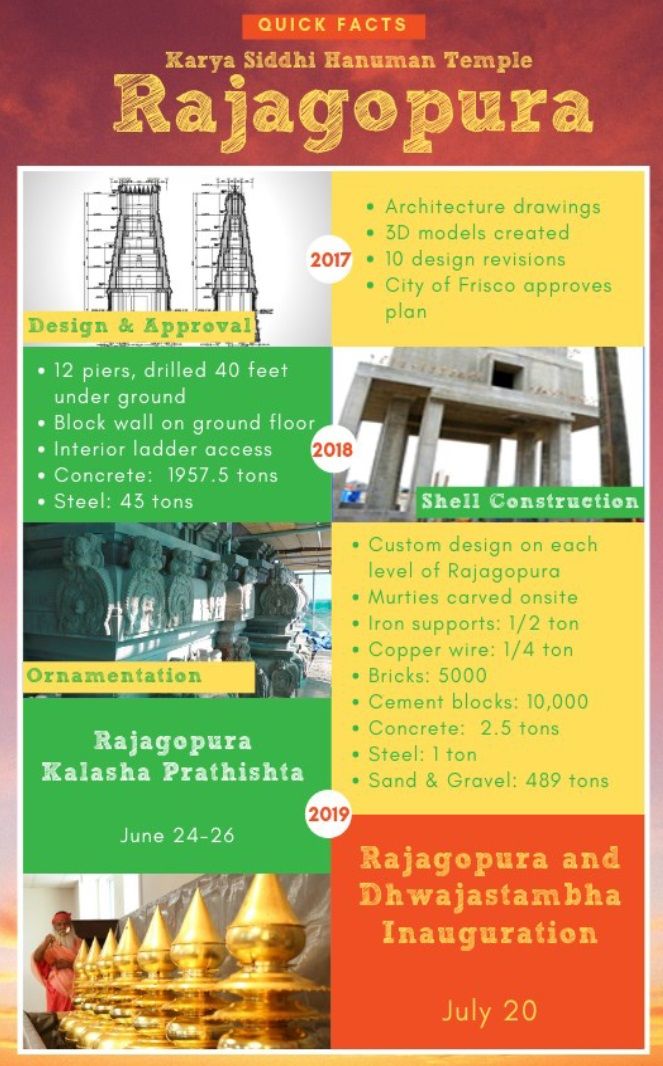
The construction of the Rajagopura adheres to the principles outlined in the Agama Shastras. In addition, modern construction techniques have been interwoven throughout the construction, which combined with the blessings of Pujya Sri Swamiji, enabled the Rajagopura to be constructed within a record time.

The KSHT Rajagopura construction was divided into 3 phases: Design and Approval: This phase started with the approval of the Rajagopura site by Sri Swamiji, immediately followed by the creation of the shell architecture drawings by local architect Sri Tim Konganda and Indianization drawings by the Sthapathi Sri Thangam Subramanian. These were then submitted to the city of Frisco for approvals and permits. The city approved the construction of the 70 feet tall Rajagopura. Rajagopura Shell Construction: Once the permits to construction were received, a general contractor was used to start building the shell that included erecting a suspended foundation slab upon which the entire Rajagopura rests. Each of the 12 piers were drilled 40 feet into the ground in order to support the entire Rajagopura structure. Ornamentation: Once the basic shell was constructed, the ornamentation or “Indianization” team of 15 Shilpis (master sculpting artisans) took over the task of converting the shell into a Rajagopura artifact containing all the traditional, authentic Indian carvings and murties.
Significance of the Dhwajasthamba

IMG_0062.JPG

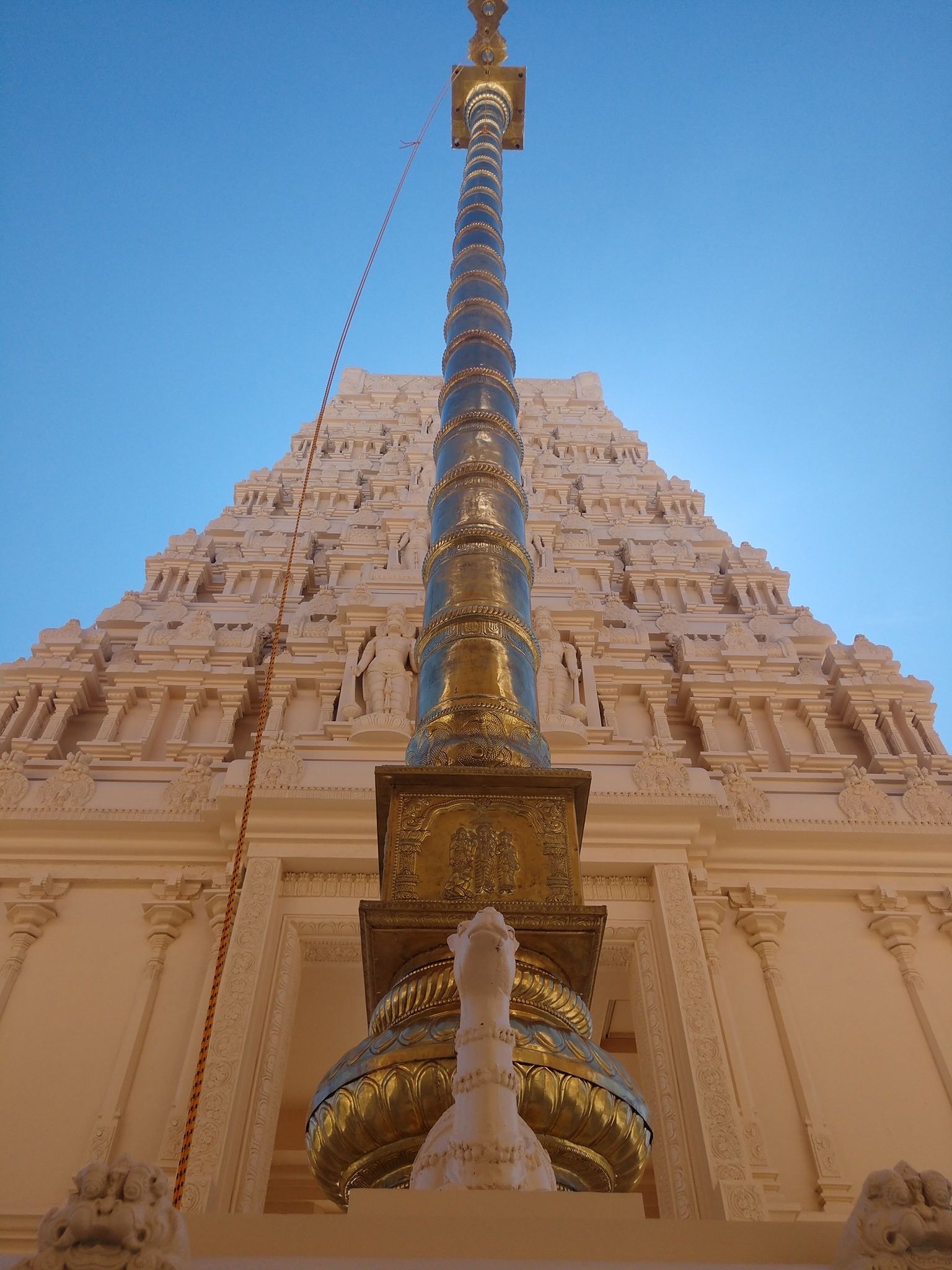
Dhwaja Dhwaja means flag and Stambha means a pole. Simply put a Dwajasthamba is a flag pole placed between the Rajagopura and the sanctum sanctorum of a temple. It is made of wood, encased in brass and an optional gold coating. The Dhwajasthamba, also known as Kodimaram, plays a vital roll in all our Hindu temples. Its height is determined according to Vasthu Shastra and typically matches the height of the sanctum sanctorum's Gopura. The animal depicted on top of the Dhwajasthamba indicates the presiding temple deity.

The top portion of the Dhwajasthamba has three horizontal branches pointing towards the Sanctum. It symbolizes the Trimurtis: Sri Brahma, Sri Vishnu and Sri Shiva) who are the Hindu trinity. Karya Siddhi Hanuman Temple’s Dhwajasthamba is 65 feet tall with 10 feet below the ground and is placed on top of a Kurma yantra. Usually, a Balipeetam, or sacrificial pedestal, is located near the Dhwajastambha. Every human has six qualities (Kama or lust, Krodha or anger, Lobha or selfishness, Moha or love, Madha or prestige, Matsarya or miserliness) which leads humans to behave like animals. In order to cleanse a mind polluted with these, devotees leave offerings to the Kshetrapalakas (temple guardians) at the Balipeetam as a symbolic shedding of the above qualities as they enter the temple for Darshan of the presiding deity.

Overview & Significance

rajagopura-plaque-opening.jpg

https://vimeo.com/353173910

A Hindu temple is akin to the human body where the Garbha Gudi (sanctum sanctorum) represents the head of the presiding deity while the Rajagopura represents the holy feet of the presiding deity. A Hindu temple is not considered completed until the Rajagopura is constructed and consecrated.

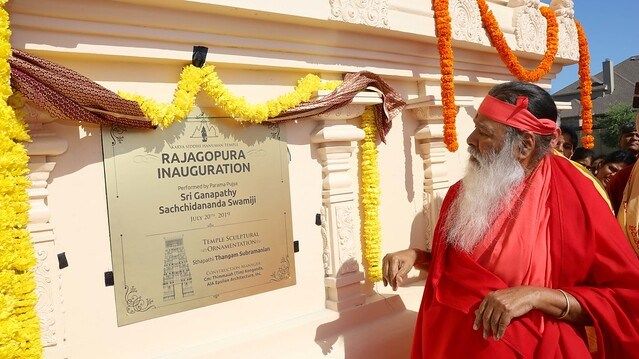
Karya Siddhi Hanuman Temple Rajagopura was inaugurated by Parama Pujya Sri Ganapathy Sachchidananda Swamiji on July 20th, 2019. Rajagopura Kalasha Sthapana was performed between June 24 to 26th, 2019 which included establishing Kalasha Yantras and installing the physical Kalashas by performing various pujas, homas and abhishekas.

The construction of a Hindu temple is based on specific, detailed methods and guidelines described in the Agama Shastras. Two very important artifacts mentioned in the Agama Shastras are the Gopuras and the Rajagopura. Many South Indian temples, from about 12th century onwards, were surrounded by a series of concentric protective walls called the Praakaaraas- meaning wall or enclosure in Sanskrit. Towers erected over the entrances of these walls are known as Gopuras.

A Gopura is generally constructed with a massive rock or stone base upon which a superstructure of multiple layers is built using bricks and mortar. The number of layers depends on numerous factors such as the Gopura’s width and height and are detailed in the Agama Shastras. Every large temple typically has 3 Gopuras in the 3 cardinal directions with the Rajagopura serving as the main entry point into the temple or temple town. Symbolically, the Rajagopura represents the feet of the temple’s presiding deity. A visitor bows at the feet of the deity at the entrance as s/he steps into the temple. Conceptually, the crest of the Gopura has the same significance as the central Brahmasthan (or central energy field) which it represents..